
A new circuit is needed and there is nowhere to put the breaker. That is the problem; the service size is a separate question.
Option 1: tandem breakers
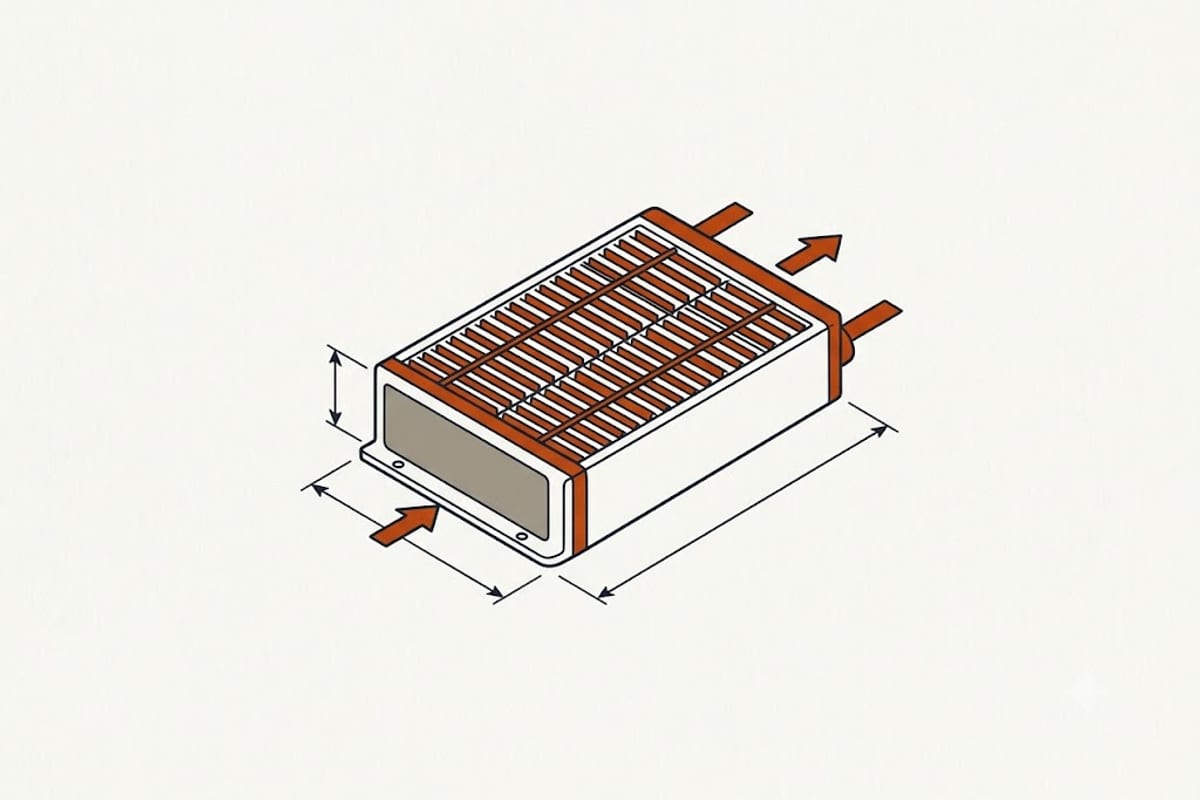
A tandem — or duplex — breaker fits two circuits into one full-size position.
They are only allowed where the panel is listed for them, and the listing specifies exactly which positions accept them. Panels marked CTL (circuit total limiting) physically reject tandems in the positions where they are not permitted.
The panel's label states the maximum number of circuits, and exceeding it is a violation regardless of whether a tandem fits mechanically.
Where the panel allows them, this is the cheapest solution by a wide margin.
Option 2: a subpanel
A subpanel is fed from a breaker in the main panel and provides a new set of positions.
It suits a garage, a basement, an addition — anywhere a group of new circuits is going, since one feeder serves many circuits.
Two rules that are frequently got wrong: the subpanel's neutral and ground must be separated, with the neutral bar isolated from the enclosure, and it needs a four-wire feeder — two hots, a neutral and an equipment grounding conductor.
Bonding the neutral at a subpanel puts normal load current on the grounding system, which is a genuine safety problem and a common finding on inspection.
Option 3: replace the panel
A larger panel with more positions, on the same service size.
Worth doing when the existing panel is old, undersized in position count, or one of the types below. It does not require a service upgrade, and the two are often quoted together when only one is needed.
Option 4: upgrade the service
Larger conductors from the meter, a larger main breaker, a new panel, and coordination with the utility.
Only necessary when the calculated load exceeds the service capacity, which is a different question from position count.
The panels that should be replaced regardless
Federal Pacific Stab-Lok — a documented history of breakers failing to trip. Widely regarded as a replacement item on sight.
Zinsco and Sylvania-Zinsco — similar concerns, with bus bar damage a common finding.
Split-bus panels without a single main disconnect, which are obsolete and awkward to work with.
Any panel with visible corrosion, overheating, or discoloured bus bars.
Where one of these is present, the panel replacement is the job and the position count is incidental.
What is not an option
Double-tapping — putting two conductors under one breaker terminal — unless the breaker is specifically listed for it, which most are not.
A tandem in a position not listed for it.
Removing a circuit to free a space without knowing what it feeds.
All three appear in houses and all three are inspection findings.
Working clearance
Any panel work has to leave the required clear space in front of it: roughly 30 inches wide, 36 inches deep, and 6 feet 6 inches high, unobstructed.
Panels are also not permitted in clothes closets or bathrooms. Where a panel is being replaced, a panel in a bad location is the moment to move it.
What to ask for on a quote
Whether the existing panel accepts tandems, and in which positions. Whether a subpanel would serve the new circuits. Whether a load calculation has been done, and what it produced.
If the answer to the last one is that no calculation was performed, the service upgrade on the quote is a guess.
Arc fault and ground fault requirements
New circuits added to a dwelling generally require AFCI protection, GFCI protection, or both, depending on the location they serve.
Those breakers are physically the same size as standard ones, so they do not change the position count — and they cost considerably more, which is worth knowing when a quote for several new circuits looks high.
Where a panel is being replaced, current requirements apply to the circuits as they are reconnected, and that is a large part of why a panel change costs more than the panel.