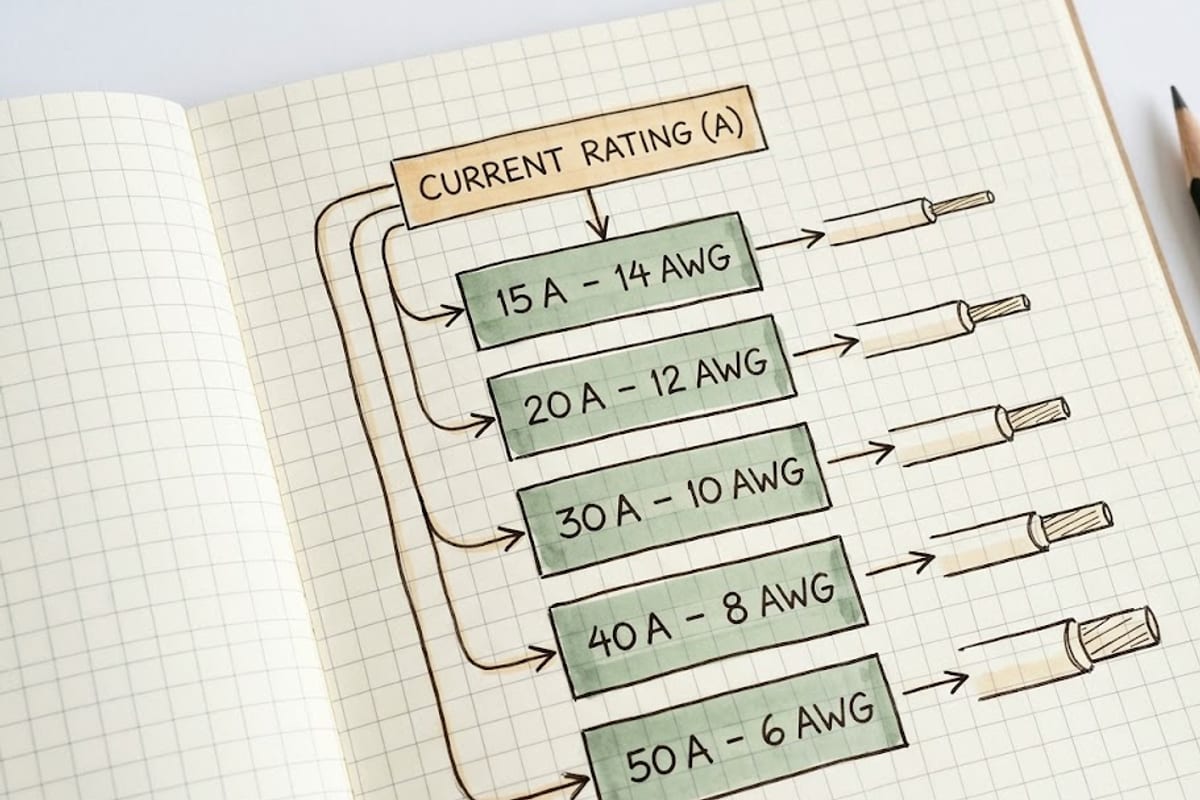
For household branch circuits in copper NM cable (Romex), the usual sizes are 14 AWG for 15 amps, 12 AWG for 20 amps, 10 AWG for 30 amps, 8 AWG for 40 amps, and 6 AWG for 50 amps. For larger circuits and feeders, copper THHN in conduit or aluminum cable is more common: a 100 amp feeder takes 3 AWG copper or 1 AWG aluminum, and a 200 amp subpanel feeder takes 3/0 copper or 250 kcmil aluminum.
Those answers assume a run short enough that voltage drop does not matter, no more than three current-carrying conductors together, and normal ambient temperatures. The sections below explain the rules behind the chart and when the answer changes.
Wire size chart
| Breaker | Copper NM cable (60°C) | Copper THHN in conduit (75°C) | Aluminum (75°C) |
|---|---|---|---|
| 15 A | 14 AWG | 14 AWG | not typical |
| 20 A | 12 AWG | 12 AWG | not typical |
| 30 A | 10 AWG | 10 AWG | 8 AWG |
| 40 A | 8 AWG | 8 AWG | 6 AWG |
| 50 A | 6 AWG | 8 AWG | 6 AWG |
| 60 A | 4 AWG | 6 AWG | 4 AWG |
| 70 A | 4 AWG | 4 AWG | 3 AWG |
| 80 A | not typical | 4 AWG | 2 AWG |
| 90 A | not typical | 3 AWG | 1 AWG |
| 100 A | not typical | 3 AWG | 1 AWG |
| 125 A | 1 AWG | 2/0 | |
| 150 A | 1/0 | 3/0 | |
| 175 A | 2/0 | 4/0 | |
| 200 A | 3/0 | 250 kcmil |
Ampacities are from NEC Table 310.16. The 75°C columns assume the breaker and the equipment terminals are rated 75°C, which is standard on modern residential breakers and panels. The 125 to 200 amp rows are for feeders that carry part of a house, such as a subpanel. Service conductors for a whole dwelling can be smaller under NEC 310.12; see what size wire for 150 amp service.
Our wire size calculator gives the size for a given breaker, length and metal, with voltage drop included.
Why 12 AWG is a 20 amp wire
Table 310.16 rates 12 AWG copper at 20 amps in the 60°C column, 25 at 75°C and 30 at 90°C. Yet a 12 AWG circuit gets a 20 amp breaker. The reason is NEC 240.4(D), the small conductor rule. Unless a specific article allows otherwise, overcurrent protection is limited to:
- 14 AWG copper: 15 amps.
- 12 AWG copper: 20 amps.
- 10 AWG copper: 30 amps.
- 12 AWG aluminum: 15 amps.
- 10 AWG aluminum: 25 amps.
These limits cap the breaker regardless of the higher ampacity columns. Air conditioner and motor circuits are one of the exceptions, which is why a heat pump nameplate can call for a 12 AWG circuit on a 30 amp breaker. See dedicated circuits.
Why NM cable uses the 60°C column
NM cable, the plastic-sheathed cable used in most houses, contains 90°C rated conductors. NEC 334.80 still limits its ampacity to the 60°C column. That is why a 50 amp circuit in NM cable needs 6 AWG (55 amps at 60°C) while 8 AWG THHN in conduit can carry 50 amps at 75°C.
The 60°C limit is also why NM cable is rarely used above 60 amps in houses. The largest common NM cable is 2 AWG, and above that SER cable or conductors in conduit take over.
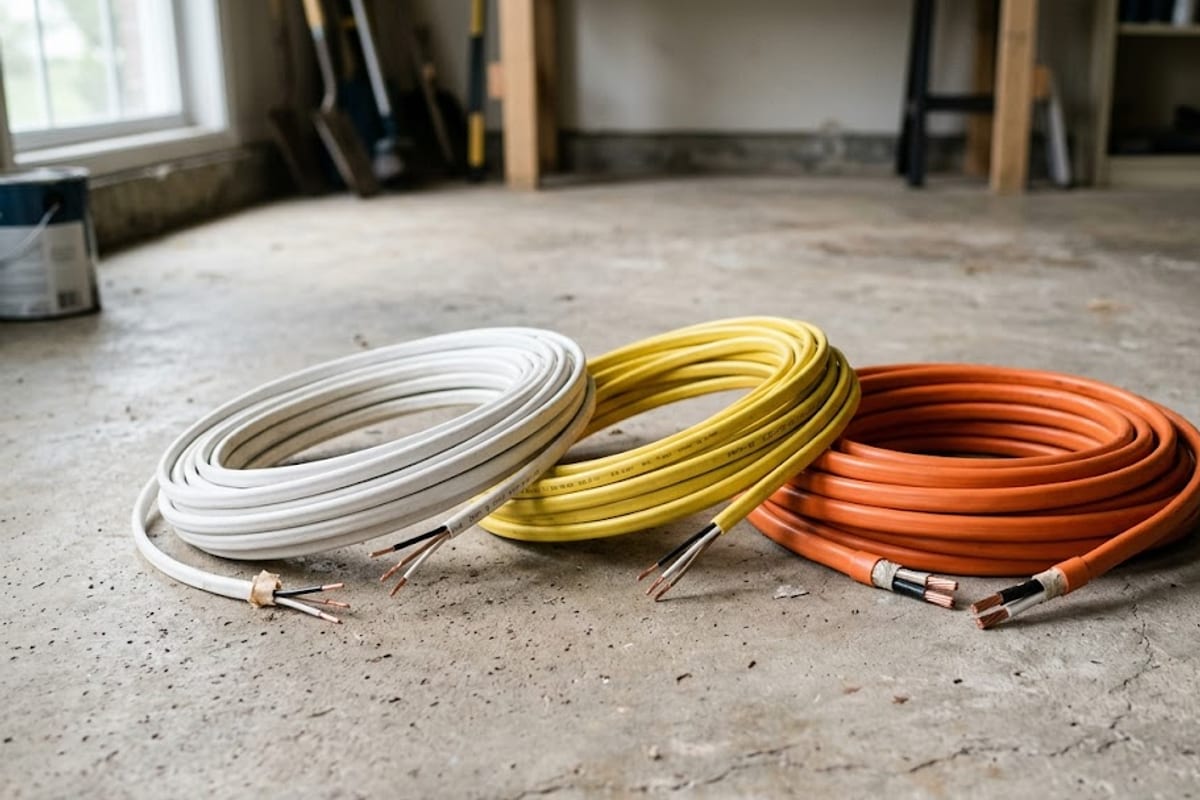
Manufacturers color the NM cable jacket by size: white for 14 AWG, yellow for 12 AWG, orange for 10 AWG, and black for 8 and 6 AWG. A yellow cable on a 30 amp breaker is a mistake an inspector will catch at a glance.
The 60 and 75 degree terminal rule
NEC 110.14(C) says conductor ampacity is limited by the temperature rating of the terminals it connects to. For circuits of 100 amps or less, the default is 60°C unless the equipment is listed for 75°C. Most modern breakers, panels and appliances are marked 60/75°C or 75°C, so the 75°C column applies to conductors that are not NM cable. Check the marking before relying on it.
Aluminum conductors
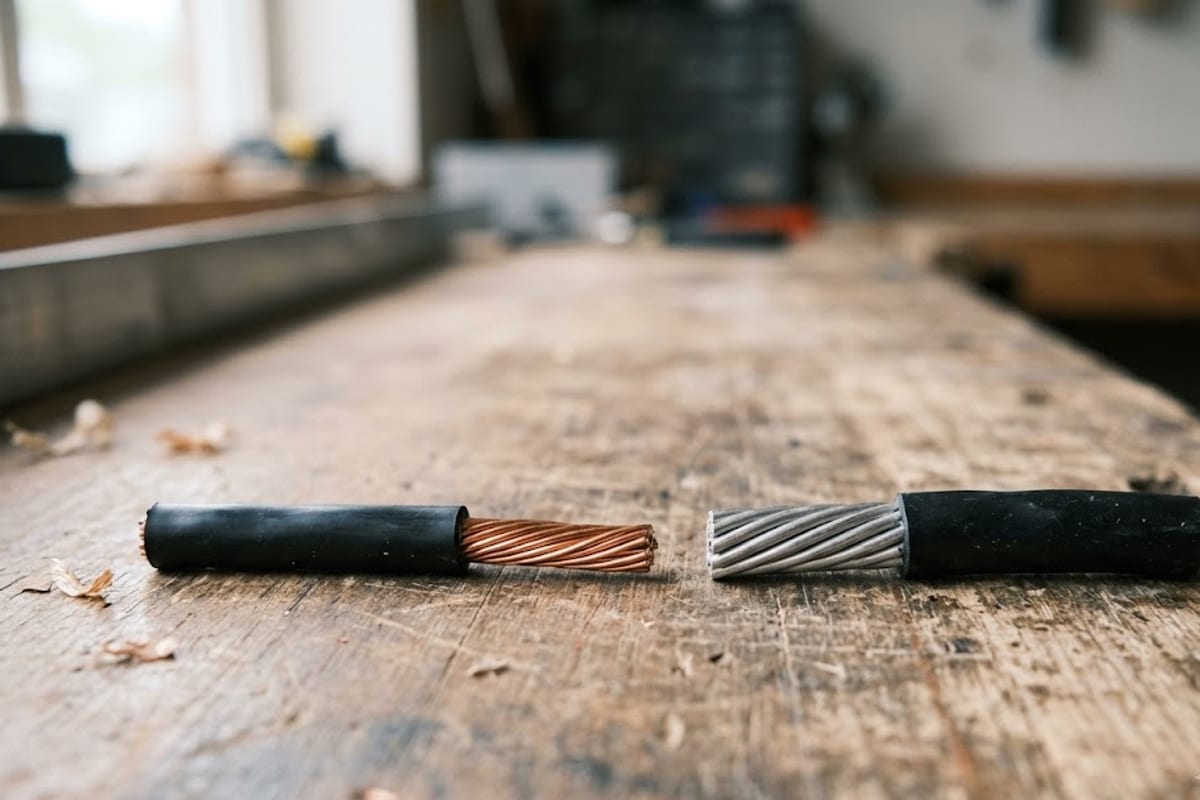
For feeders and services, aluminum is standard. It costs much less than copper and, in the AA-8000 series alloys used today, performs well when it lands on lugs rated for aluminum and is torqued to the panel label.
Aluminum needs to be one or two sizes larger than copper for the same current. A 100 amp feeder takes 3 AWG copper or 1 AWG aluminum.
Small aluminum branch circuit wiring, 15 and 20 amp circuits wired in the 1960s and 1970s, is a different matter. Those installations have a documented history of overheating at devices and connections, and they need special connectors or remediation. That concern does not apply to modern aluminum feeders.
When distance changes the answer
Ampacity keeps the wire from overheating. On long runs, voltage drop can be the tighter limit. The NEC's informational notes suggest keeping voltage drop to 3% on a branch circuit and 5% total to the farthest outlet. They are not enforced as code, but they are the usual design target.
Rough guide for copper at the full breaker current on a 240 volt circuit:
- A 30 amp circuit on 10 AWG reaches about 3% at roughly 100 feet.
- A 50 amp circuit on 6 AWG reaches about 3% at roughly 140 feet.
- A 100 amp feeder on 3 AWG reaches about 3% at roughly 140 feet.
At 120 volts the distance for the same percentage is half. Real loads are usually below the breaker rating, so these are conservative. For garages, shops and outbuildings, check the calculation for the actual run. See voltage drop on long runs and wire to a detached garage.
Other factors that reduce ampacity
- Bundling. More than three current-carrying conductors in a raceway or cable bundle require adjustment under 310.15(C)(1).
- Hot locations. Conductors in attics, on rooftops, or in hot spaces need temperature correction under 310.15(B).
- Insulation. NM cable passing through thermal insulation or bundled through holes in studs can require derating.
Each of these can push a circuit up one wire size.
Upsizing an existing circuit
A common question is whether a circuit can get a larger breaker because it keeps tripping. The answer depends only on the wire. A 15 amp circuit on 14 AWG copper stays at 15 amps; putting a 20 amp breaker on it lets the wire carry more current than it is rated for, and the breaker no longer protects it. If the load needs more than the circuit can carry, the fix is a new circuit or new wire.
The reverse is allowed. A 12 AWG circuit can have a 15 amp breaker, and electricians sometimes run 12 AWG on 15 amp lighting circuits for lower voltage drop on long runs.
Checking an existing circuit is simple with the power off: the gauge is printed on the conductor insulation or the cable jacket every foot or two. An electrician can confirm it at the panel.
Common household circuits
| Circuit | Breaker | Typical cable |
|---|---|---|
| Bedroom, living room receptacles and lights | 15 A | 14/2 NM copper |
| Kitchen countertop, laundry, bathroom, garage | 20 A | 12/2 NM copper |
| Electric dryer | 30 A, 240 V | 10/3 NM copper with ground |
| Tank water heater, 4,500 W | 30 A, 240 V | 10/2 NM copper |
| Electric range | 50 A, 240 V | 6/3 NM copper with ground |
| EV charger set to 48 A | 60 A, 240 V | 6 AWG copper THHN in conduit, or 4 AWG NM |
| 100 A subpanel | 100 A, 240 V | 3 AWG copper or 1 AWG aluminum, four conductors |
A dryer and a range need a neutral as well as two hots and a ground, which is why their cables are "/3." A water heater uses only the two hots and a ground.
Who does this
Choosing a wire size is design. Installing it means connecting to a panel where the main lugs stay energized, and most jurisdictions require a permit and an inspection. Use the chart to check a plan or a quote. If an existing circuit has a breaker larger than its wire allows, have an electrician correct it, because the breaker is the only thing protecting that wire.
FAQ
What size wire for 30 amps? 10 AWG copper for NM cable or THHN, or 8 AWG aluminum.
What size wire for 50 amps? 6 AWG copper NM cable, or 8 AWG copper THHN in conduit with 75°C terminals. 6 AWG aluminum at 75°C.
What size wire for 60 amps aluminum? 4 AWG aluminum at 75°C, rated 65 amps. See the 60 amp aluminum calculator for longer runs.
What size wire for a 100 amp subpanel? 3 AWG copper or 1 AWG aluminum, plus a separate neutral and equipment grounding conductor. See subpanel neutral and ground.
Can I put a 20 amp breaker on 14 gauge wire? No. 240.4(D) limits 14 AWG copper to 15 amps.