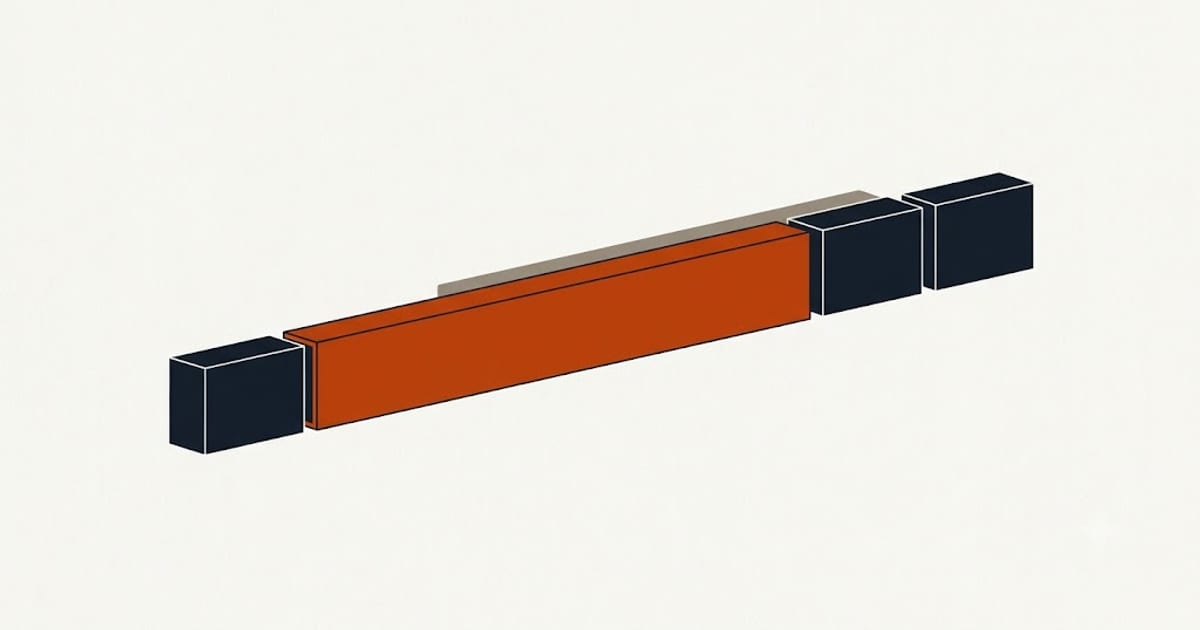
Cable and devices are inexpensive. Almost everything else on an electrical quote is labour, and the labour is determined by what stands between the panel and where the circuit has to go.
The access ladder
Open framing — new construction, or a renovation with walls open. Cheapest by a wide margin. Running cable through open studs is fast.
An accessible attic or basement above or below the destination. Straightforward: drill down or up, fish the last few feet.
A finished wall with an accessible space at one end. Fishing, some drilling, one or two small holes to patch.
A finished wall with no access at either end — a middle floor of a two-storey house, a slab-on-grade with no attic. Expensive: multiple openings, and drywall repair, texture and paint afterwards.
Masonry, plaster and lath, or a finished basement ceiling. More expensive again, and slower.
The same 20 amp circuit spans a very wide price range across that list, and none of the difference is the wire.
What else moves a quote
Distance from the panel, which is material and time and sometimes a larger conductor for voltage drop.
AFCI and GFCI breakers, several times the price of standard ones, and required for most new residential circuits.
Panel work. A full panel means a subpanel or a replacement before any new circuit can be added, and that is a job of its own.
Making good. Drywall repair, texture matching, painting. Some electricians include it, many leave it, and a quote that excludes it is not comparable to one that includes it.
Permit and inspection, and the scheduling around them.
Discovery. Old wiring, undersized conductors, missing grounds, and violations found once a wall is open. On an older house this is the item that most often turns a quote into a larger number.
Where to spend to reduce future cost
Run conduit or a spare raceway while a wall is open, so a future circuit is a pull rather than an excavation.
Oversize the feeder to a subpanel, which costs little extra now and avoids doing it again.
Add positions, not just circuits — a panel with spare spaces is worth having.
Do everything at once while the walls are open. A second visit to the same wall costs most of what the first one did.
Comparing quotes
Ask each contractor for the same scope, in writing: which circuits, what size, what protection, whether drywall repair is included, whether a permit is included, and what happens if existing violations are found.
Two quotes on the same house that differ substantially usually differ on the last two items, and the cheaper one is frequently the one that will produce a conversation later.
Where a fixed price is not realistic
Work in an old house with unknown wiring, where opening a wall determines the scope.
A time and materials arrangement with a cap, or a fixed price for the known work plus an agreed hourly rate for discoveries, is a fairer structure than a fixed price that a contractor has padded to cover the unknown — and it usually costs the household less.
Rates and minimums
Most residential electricians charge a service call minimum covering the first period on site, and small jobs are priced against that rather than against the work.
The practical consequence is that batching small tasks into one visit is substantially cheaper than calling someone out three times. A list of everything that needs doing, given at the time of booking, usually gets all of it done in one call.
Where a homeowner can legitimately reduce the bill
Access. Clearing the panel area, emptying a closet the cable has to pass through, moving what is stored in the crawl space, and arranging attic access before the electrician arrives.
Every one of those is time on the clock, and it is time a household can spend instead.