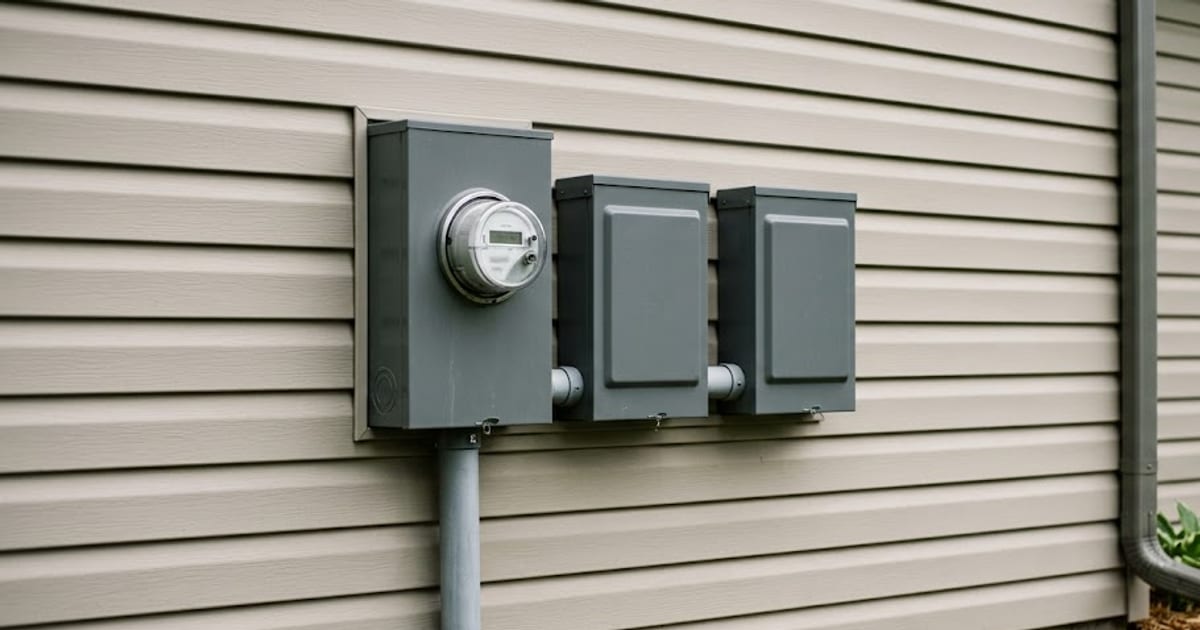
A 400 amp service upgrade on a house usually costs $4,000 to $9,000, with a typical job around $6,000, and a difficult one can pass $12,000. That is two to three times the price of a 200 amp upgrade, and the gap comes from equipment and utility work more than from labor hours.
Fixr's January 2025 cost data puts 400 amp work at $8,000 to $12,000, which reflects jobs that include new feeders or panel relocation. Our state pages use $6,000 as the national midpoint for the equipment and installation alone, then scale the labor share by what electricians earn in each state. In Texas that comes to $5,303; in Massachusetts it is higher.
Why a 400 amp service costs so much more than 200
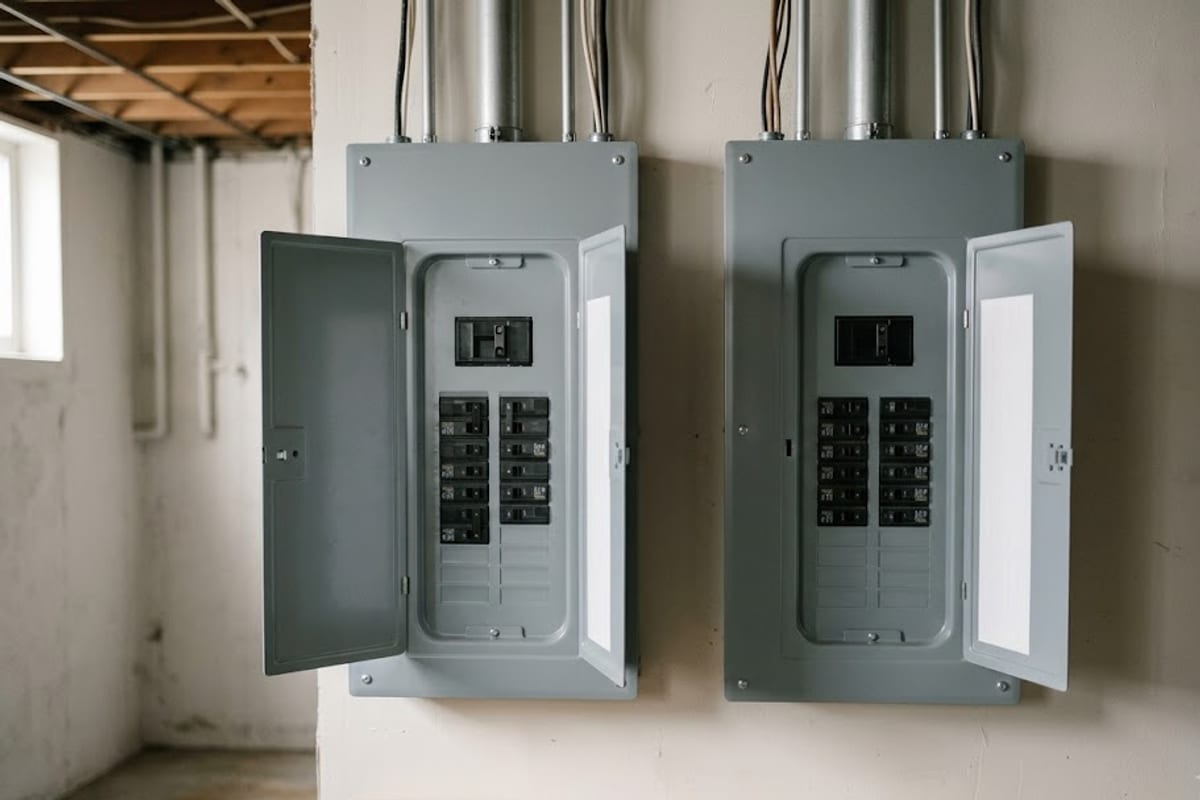
Residential "400 amp" service is rarely one 400 amp panel. The common arrangement is a 320 amp continuous-rated meter socket (sold as 400 amp class) feeding two 200 amp panels, each with its own main breaker. That arrangement exists because 200 amp residential panels and breakers are mass-produced and cheap, while a single 400 amp main breaker and bus is commercial equipment.
So the bill includes:
- A 320/400 amp meter socket, which costs several times what a 200 amp socket costs.
- Two panels and two main breakers instead of one.
- Larger service entrance conductors. Under NEC 310.12, dwelling service conductors may be sized at 83% of the service rating, which still means roughly 400 kcmil copper or 600 kcmil aluminum per leg for 400 amps.
- A larger conduit and, on an overhead service, a heavier mast.
- Two sets of branch circuits reorganized between the panels.
The labor is also longer than a 200 amp swap. Splitting circuits between two panels and pulling large conductors is a full day or more for a crew.
What the utility may charge
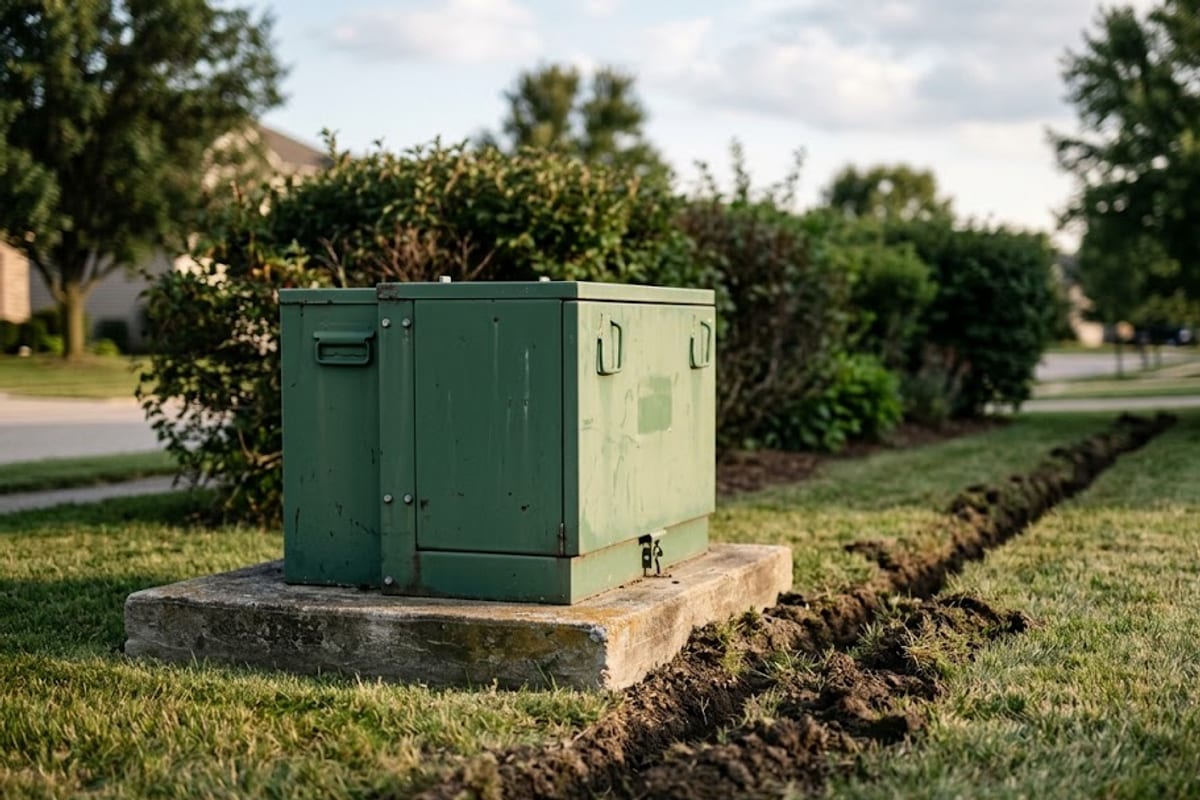
At 200 amps, the utility usually reconnects to the existing drop or lateral. At 400 amps, many utilities review the transformer that serves the house, because a single residential transformer is often shared by several homes and sized for their combined load.
Depending on the utility, that review can mean:
- A new, larger service drop or underground lateral at the utility's expense or yours.
- A transformer upgrade, sometimes billed to the customer.
- A delay of weeks while engineering signs off.
Some utilities publish these rules in their service manuals. PG&E and ComEd, for example, each have a formal service-upgrade request process that must be started before the electrician can schedule the cutover. Ask your electrician which parts the utility pays for in your area, because this is the line that moves a $6,000 estimate to $10,000.
Code items that come with any new service
A service replacement triggers current code for the service equipment, whatever the size. Under the 2020 and 2023 NEC:
- Surge protection (230.67). A Type 1 or Type 2 surge protective device is required for services supplying dwelling units, including when the service equipment is replaced.
- Outdoor emergency disconnect (230.85). One- and two-family dwellings need a readily accessible disconnect outside. A meter socket with a built-in main breaker is the common way to meet it.
- Grounding and bonding. The grounding electrode system is brought up to current requirements, often two ground rods at least 6 feet apart and bonding to water and gas piping.
Each adds a few hundred dollars. None is optional once the old service comes out.
When a house actually needs 400 amps
Most houses asking for 400 amps do not need it. The requirement comes from a load calculation under NEC Article 220, not from the number of large appliances in the house.
The standard method takes the general lighting load at 3 VA per square foot, the small-appliance and laundry circuits, and fixed appliances, applies demand factors, and adds the larger of heating or cooling. A 3,000 square foot all-electric house with a heat pump, electric range, dryer and water heater typically calculates well under 200 amps.
Houses that cross 200 amps usually have several of these at once:
- Electric resistance heat or large heat strips on a heat pump.
- Two or more EV chargers without load management.
- A pool with electric heat, or a large hot tub.
- A second dwelling, such as an ADU, on the same service.
- More than about 5,000 square feet, fully electric.
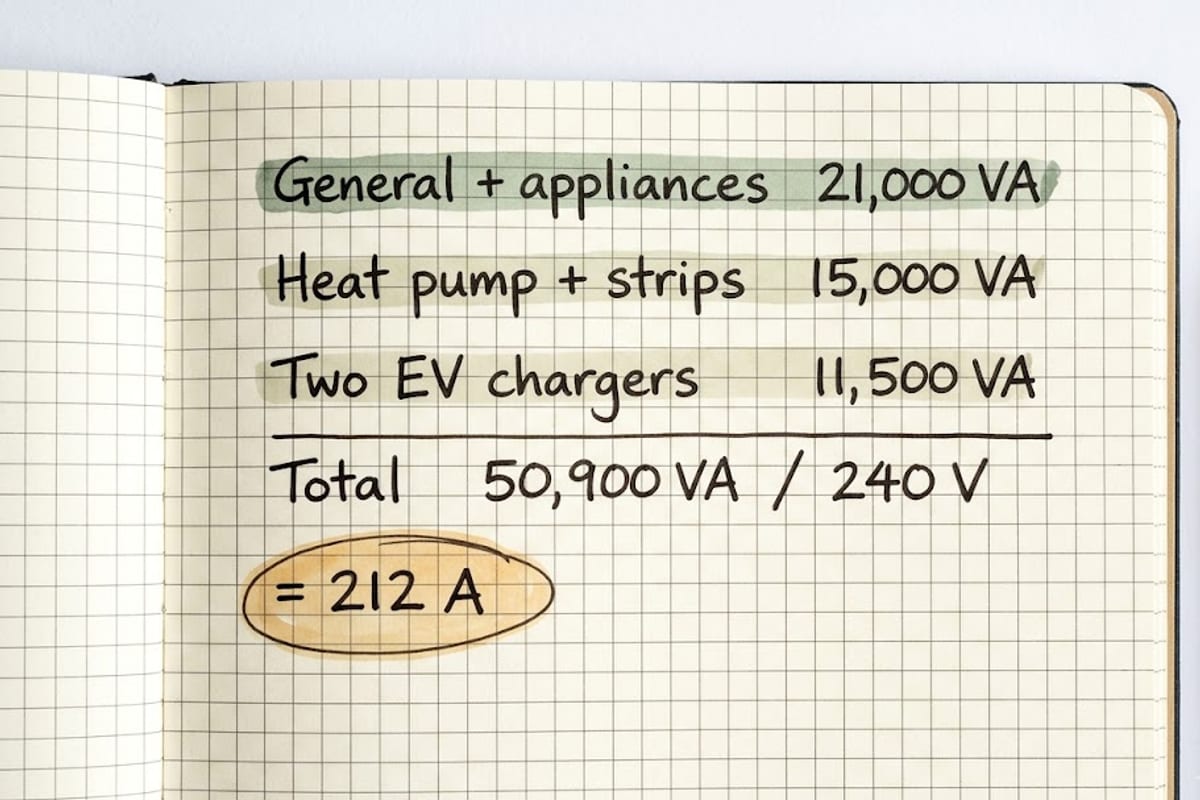
The example in the notebook is a simplified total, not a code calculation, but it shows the pattern. Two EV chargers and heat strips together push a large house just past 200 amps. Our service size calculator runs the Article 220 method for a given square footage and fuel mix.
Cheaper alternatives to 400 amps
If the calculation lands just over 200 amps, two options often cost far less than a new service.
Load management. NEC 220.70 and Article 750 allow an energy management system to limit what the calculation must include. An EV charger that pauses while the heat pump runs, or a smart panel that sheds loads, can keep a house on 200 amps. See load management instead of an upgrade.
Managed EV charging. A 48 amp charger can usually be set to 32 amps or lower. Overnight charging at 32 amps still adds roughly 25 to 30 miles of range per hour for most EVs.
A 320 amp service with one 200 amp panel. Some electricians install the 320 amp meter socket now and one panel, leaving room to add the second panel later. You pay for the socket and conductors once and defer the second panel.
Getting a useful quote
Three bids on the same scope should land within about 30% of each other. When they do not, the scope differs. Ask each electrician to state:
- Whether the price includes the meter socket, both panels, the surge protective device and the outdoor disconnect.
- Whether the load calculation was done and what it came to.
- What the utility will do and who pays for the transformer or lateral.
- How long the house will be without power on cutover day.
- Permit and inspection fees.
A 400 amp service is licensed work in every state, with a permit and an inspection before the utility will reconnect. Nothing about it is a homeowner project.
FAQ
How much does a 400 amp panel cost by itself? There is rarely a single 400 amp panel in a house. The equipment is sold as a 320/400 amp meter socket plus two 200 amp panels, and its price depends on brand and on whether the panels are indoor or outdoor rated. On our state pages, materials are about 32% of the typical total, so roughly $1,900 of a $6,000 job. The rest is conductors, labor, permits and utility work.
Is 320 amps the same as 400 amps? For residential service, yes in practice. The meter socket is rated 320 amps continuous and 400 amps maximum, and utilities list it as a 400 amp class service.
Can I go from 100 amps straight to 400? Yes, but it is rarely justified. Run the load calculation first. Going from 100 to 200 amps costs about half as much. See the cost of a 100 to 200 amp upgrade.
Does a 400 amp service raise my electric bill? No. You pay for energy used, not for capacity. Some utilities charge a higher monthly fee for larger services, so check your tariff.