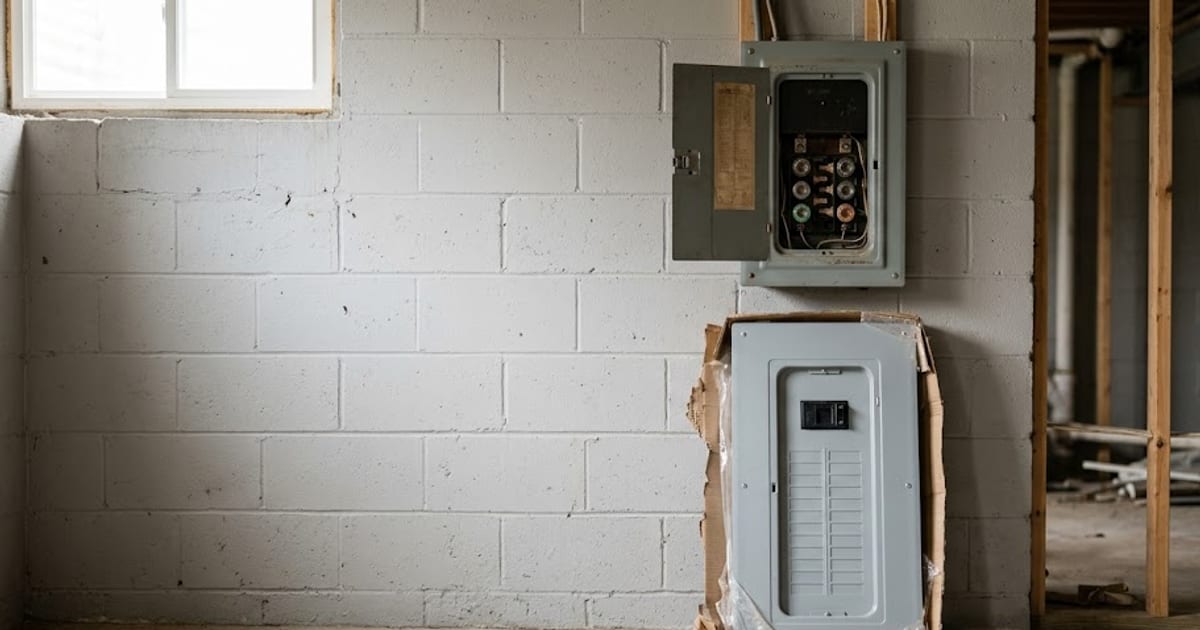
Upgrading a house from 100 to 200 amp service usually costs $1,800 to $4,000, and a typical job with no surprises comes in around $2,800. Fixr's January 2025 data gives a similar picture: $1,800 to $4,500 for 200 amp work and a national average of $3,000 for panel upgrades.
The price moves mostly with two things: how much of the service outside the house has to be replaced, and what the electrician finds once the old panel comes off the wall. Our state pages scale the labor share by local electrician pay, from about $2,320 in Arkansas to $3,183 in California.
What a 100 to 200 amp upgrade replaces
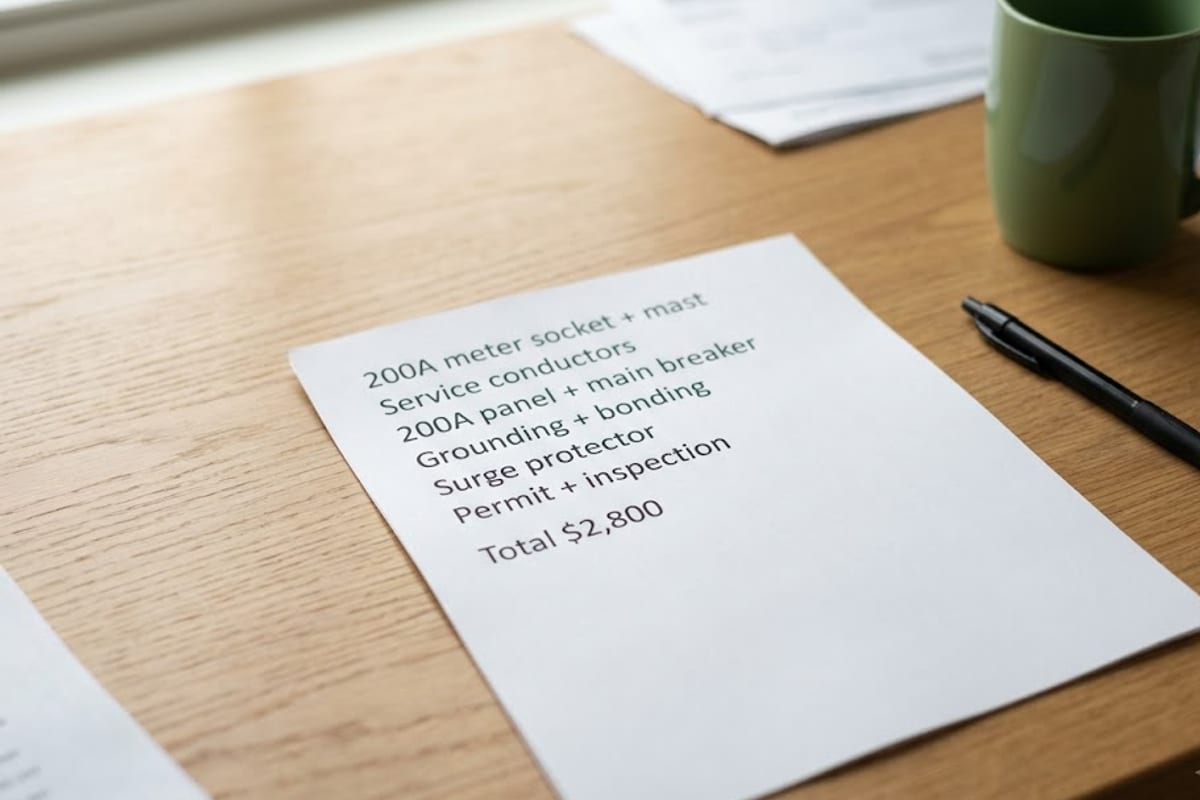
A true service upgrade replaces everything from the utility's connection point to the new panel. Each piece is sized for 200 amps.
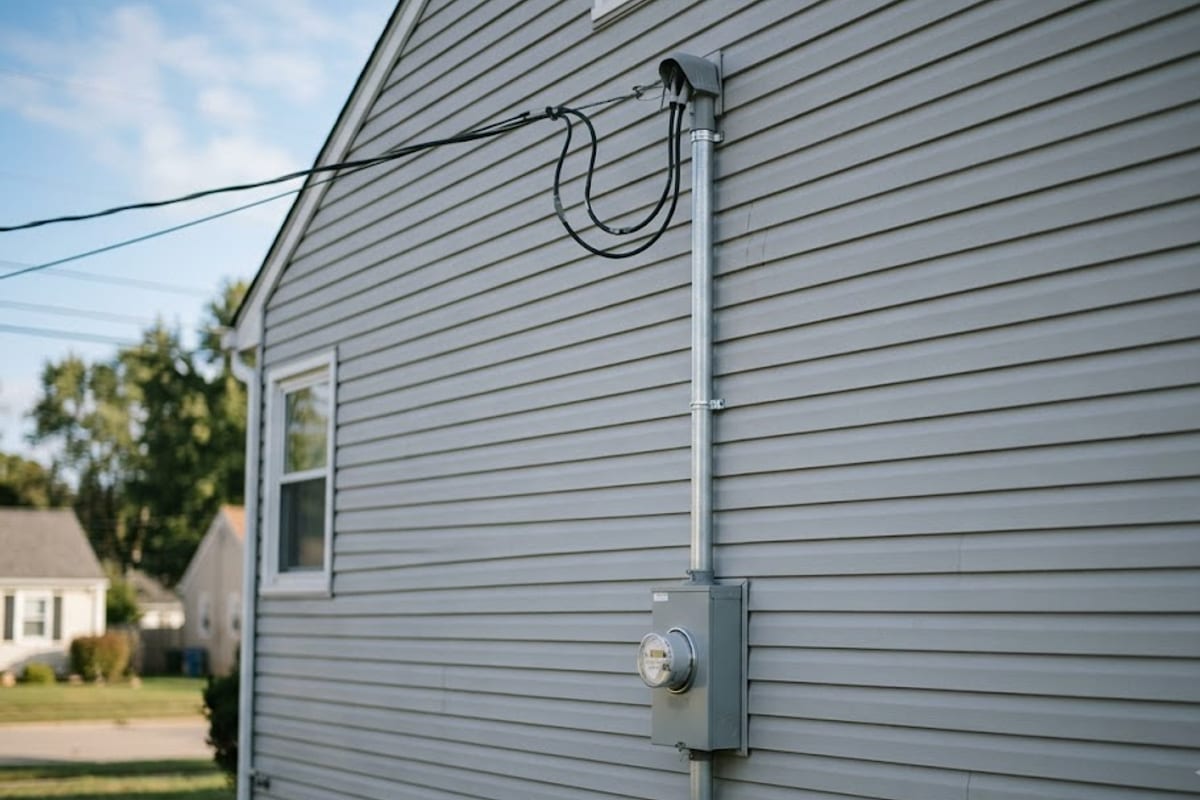
The meter socket. A 100 amp socket cannot be reused. The utility owns the meter; you own the socket it plugs into.
The mast or conduit. On an overhead service, the mast and weatherhead carry the service conductors from the utility drop down to the socket. A 100 amp mast is often too small for 200 amp conductors.
The service entrance conductors. Under NEC 310.12, conductors serving the whole dwelling can be sized at 83% of the rating. For 200 amps that is typically 2/0 copper or 4/0 aluminum.
The panel and main breaker. A 200 amp load center with 30 to 42 spaces. The panel itself is one of the cheaper parts of the job.
Grounding and bonding. Ground rods, the grounding electrode conductor, and bonds to metal water and gas piping, brought to current code.
Panel swap or service upgrade: read the quote
Two quotes for "a 200 amp upgrade" can describe different jobs.
A panel swap replaces only the panel. If the house already has a 200 amp meter socket and conductors, or the utility and inspector allow the existing service to stay, a panel swap can be all that is needed. It usually costs less, often under $2,000.
A service upgrade replaces the meter socket, the conductors, the mast or conduit, the grounding, and the panel. It is the job most 100 amp houses need, because a 100 amp service was built with 100 amp parts from the pole to the panel.
If one quote is far below the others, check whether it includes the meter socket and conductors. A 200 amp panel on a 100 amp service is still a 100 amp service.
Line items that get added
These are legitimate costs. They should appear on the quote rather than arrive as change orders.
Surge protection. Since the 2020 NEC (230.67), a new dwelling service needs a surge protective device. Many panels accept a plug-in unit.
An outdoor emergency disconnect. NEC 230.85 requires one for one- and two-family dwellings when the service equipment is replaced. A meter socket with a built-in main breaker meets it and avoids a separate box.
AFCI and GFCI breakers. When circuits move to the new panel, many jurisdictions require arc-fault and ground-fault protection to be brought up to current rules. A dual-function 20 amp breaker such as Square D's QO120DFC lists for about $80 at Home Depot, so ten of them add $800 before labor. See AFCI and GFCI requirements.
Panel relocation. A panel in a clothes closet or a bathroom, or without the required 30 inch wide by 36 inch deep working space, has to move. Moving it means extending every branch circuit. See panel location and clearances.
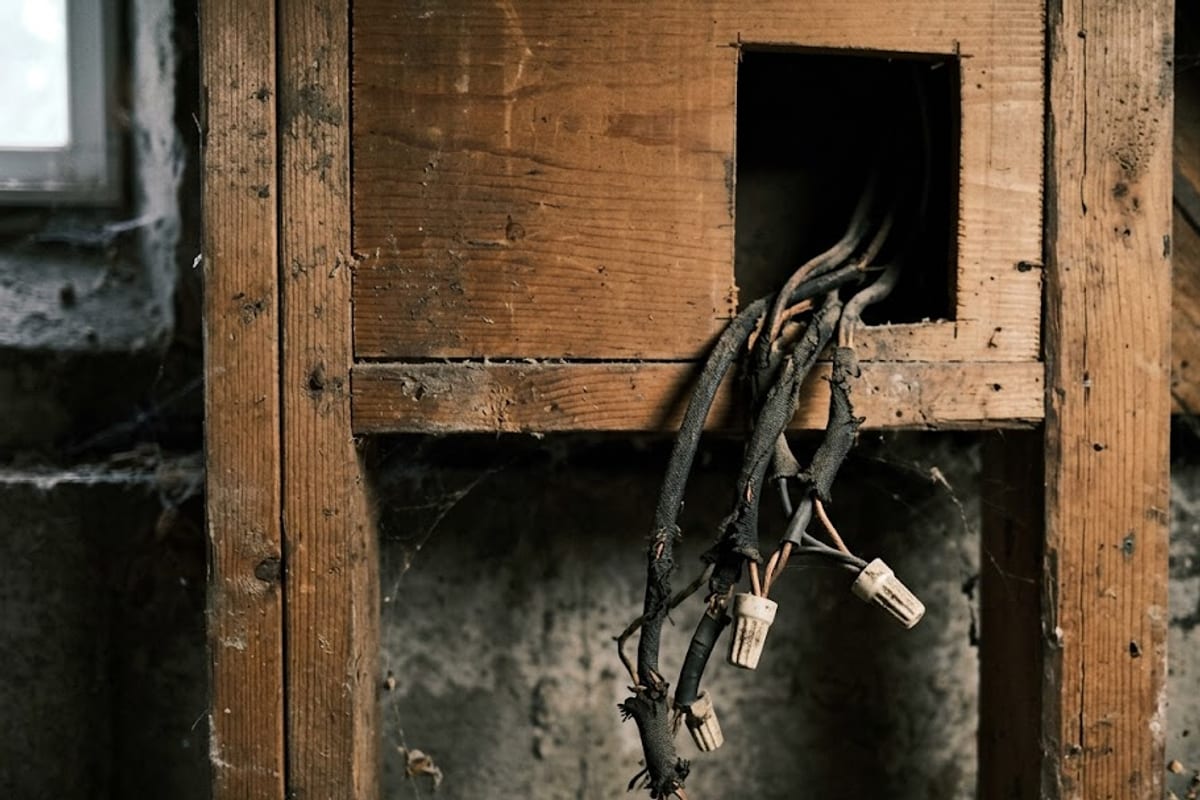
Old wiring. Behind a 1950s panel it is common to find cloth-insulated cable, overloaded splices, or aluminum branch circuits. The inspector will require obvious hazards at the panel to be fixed.
Permit and inspection. Fixr puts permits at $50 to $300 in most places. Some cities charge more for service work.
Utility fees. Many utilities disconnect and reconnect for free. Some charge a fee or require an upgraded drop at your cost.
How long it takes
The electrician's work is usually one day. The calendar time depends on the utility, which must disconnect the service before work starts and reconnect it after the inspection.
In many areas the utility and inspector can both come the same day and the house is back on power by evening. In others, the house waits a day or more between inspection and reconnection. Ask the contractor how they will sequence it.
Do you need 200 amps?
Many 100 amp houses run fine for decades. The question is answered by a load calculation, not by the number of breakers or the age of the panel.
A 100 amp service is often enough for a small house with gas heat, a gas range and a gas water heater. It gets tight when you add a heat pump, an EV charger, an electric range, or electric heat. Our calculator for a 100 amp service with a heat pump and the article do I need 200 amp service walk through the arithmetic.
If the calculation says 100 amps is close but not over, a load management device or a smaller EV charger setting can defer the upgrade. See load management instead of an upgrade.
Where the money goes on a typical job
On our state pages, labor is about 68% of a 200 amp service upgrade and materials about 32%. That split is why the same job costs more in states where electricians earn more, while the equipment costs about the same everywhere.
| Part of the job | Share of a $2,800 job |
|---|---|
| Labor, including permit time and utility coordination | about $1,900 |
| Materials: socket, mast, conductors, panel, breakers, grounding | about $900 |
Heavier jobs add to both lines: more breakers, more wire to extend circuits, more hours.
Rebates and tax credits in 2026
The federal Energy Efficient Home Improvement Credit (section 25C) used to cover 30% of a panel upgrade, up to $600, when it supported a heat pump or similar equipment. That credit ended for work placed in service after December 31, 2025, under the 2025 tax law. The IRS test is when the installation was completed, so a panel finished in 2025 can still be claimed on a 2025 return.
The Inflation Reduction Act's home electrification rebates, run by state energy offices, include up to $4,000 toward an electric panel or service upgrade for households under income limits. Availability depends on whether your state has launched its program and whether funds remain. Some utilities also offer panel upgrade rebates when the upgrade supports a heat pump or an EV charger. Check your state energy office and your utility before signing, because some programs require pre-approval.
Getting three comparable quotes
Give each electrician the same list and ask for a price on each item:
- New 200 amp meter socket, mast or conduit, and service conductors.
- New 200 amp panel with main breaker, and the number of spaces.
- Grounding electrode system and bonding.
- Surge protective device and outdoor emergency disconnect.
- Which circuits will get AFCI or GFCI protection.
- Permit, inspection, and utility coordination.
This is licensed work that needs a permit and an inspection in essentially every jurisdiction. Working inside a meter socket or panel with the service energized is dangerous even for trained electricians, and the utility will not reconnect an uninspected service.
FAQ
Is a 100 to 200 amp upgrade worth it when selling a house? Buyers and insurers often flag 100 amp service and fuse panels. An upgrade removes the objection, though it rarely returns its full cost in sale price.
Can I upgrade to 150 amps instead? Yes. On our pages a 150 amp upgrade is about $2,200 nationally against $2,800 for 200 amps (Michigan example). Because most of the cost is labor that is the same either way, most homeowners who are already paying for a service upgrade choose 200.
Does the utility have to upgrade the line to my house? Often not for 200 amps. The existing drop or lateral usually carries 200 amps. The utility decides, and some require a new drop.