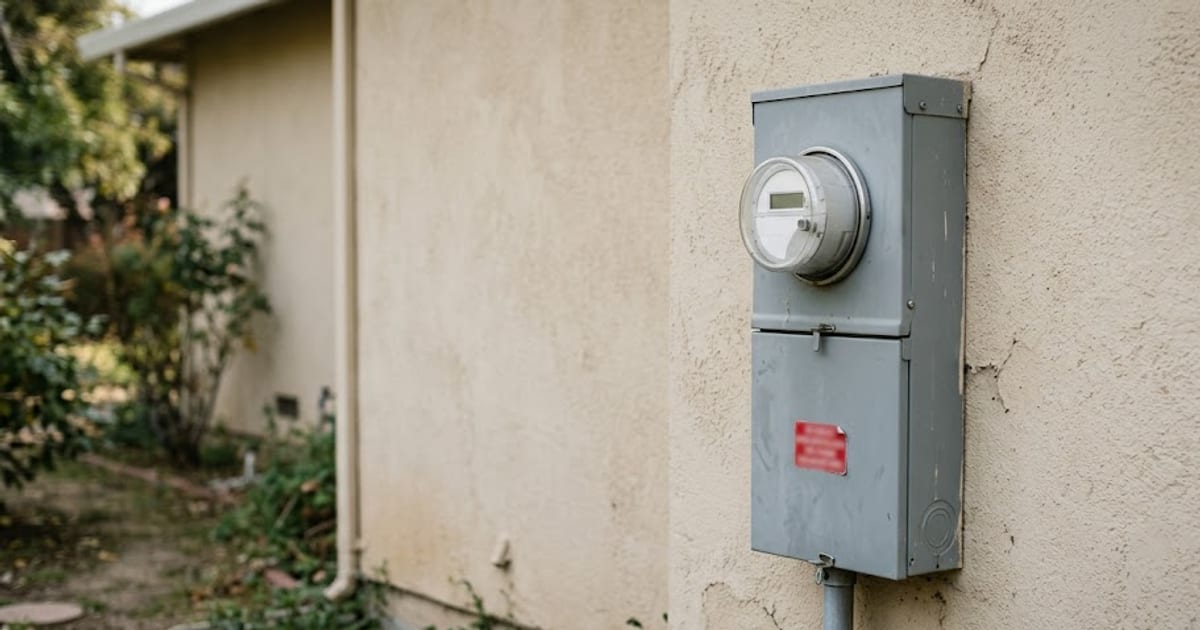
A meter base with disconnect, often sold as a meter-main or meter combo, is a single outdoor enclosure that holds the utility meter and a main breaker. Turning that breaker off cuts power to the whole house from outside, without opening the house.
Since the 2020 National Electrical Code, section 230.85 requires an outdoor emergency disconnect for one- and two-family dwellings, and it applies when the service equipment is replaced. That is why a meter base with disconnect shows up on so many service upgrade quotes. It is the simplest way to comply, though not the only one.
What NEC 230.85 requires
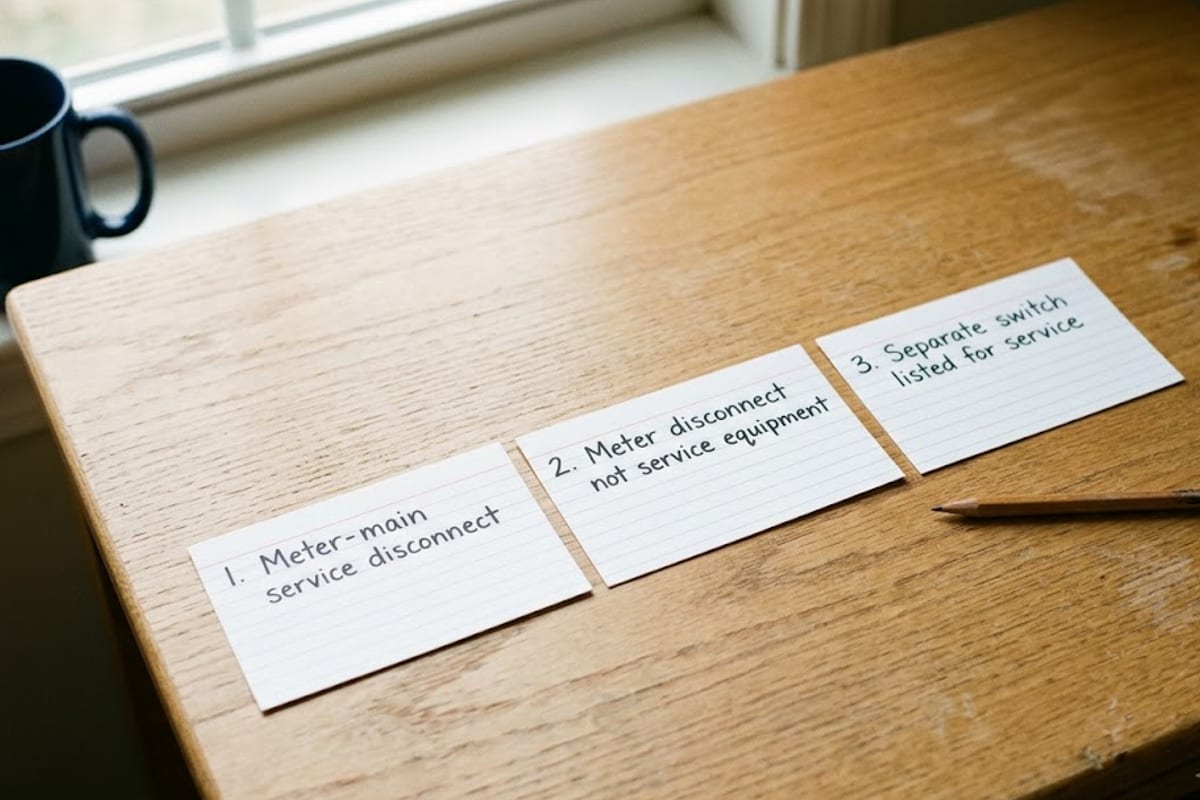
The rule exists so firefighters can shut off power to a house quickly from outside. The disconnect must be readily accessible, outside the dwelling, and it can be one of three things:
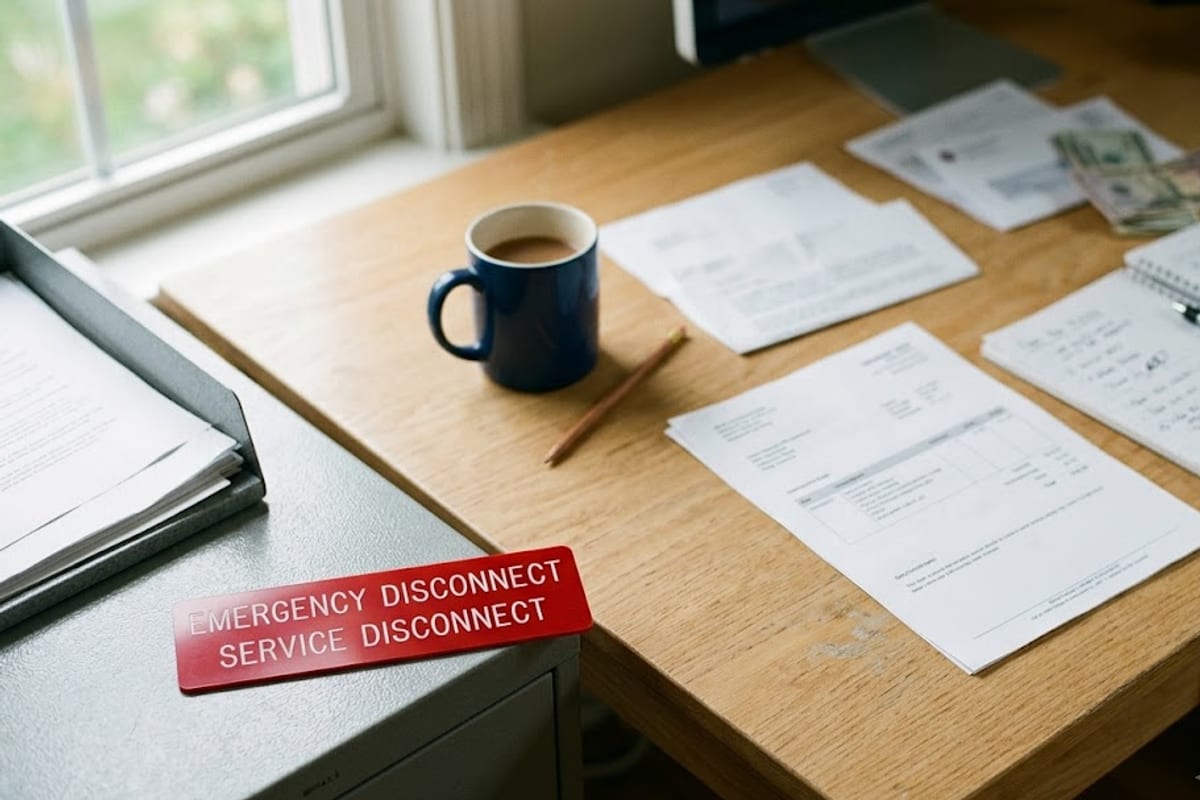
- The service disconnect itself, usually a main breaker in a meter-main. Marked "EMERGENCY DISCONNECT, SERVICE DISCONNECT."
- A meter disconnect built into the metering equipment, which is not the service disconnect. Marked "EMERGENCY DISCONNECT, METER DISCONNECT, NOT SERVICE EQUIPMENT."
- Another listed disconnect switch or breaker suitable for use as service equipment, installed outside. Marked "EMERGENCY DISCONNECT, NOT SERVICE EQUIPMENT."
The markings must be permanent, white letters on a red background, at least 1/2 inch high.
When it applies to existing houses. Section 230.85 applies to new services and to replacements of service equipment. There is an exception when only the meter socket, the service entrance conductors, or their raceways and fittings are replaced. So swapping a damaged meter socket alone may not trigger it. Replacing the panel with the main breaker, or doing a full service upgrade, generally does. Your jurisdiction's adopted code edition and any local amendments decide.
The three options, and what each does to the panel inside
Option 1: meter-main as the service disconnect
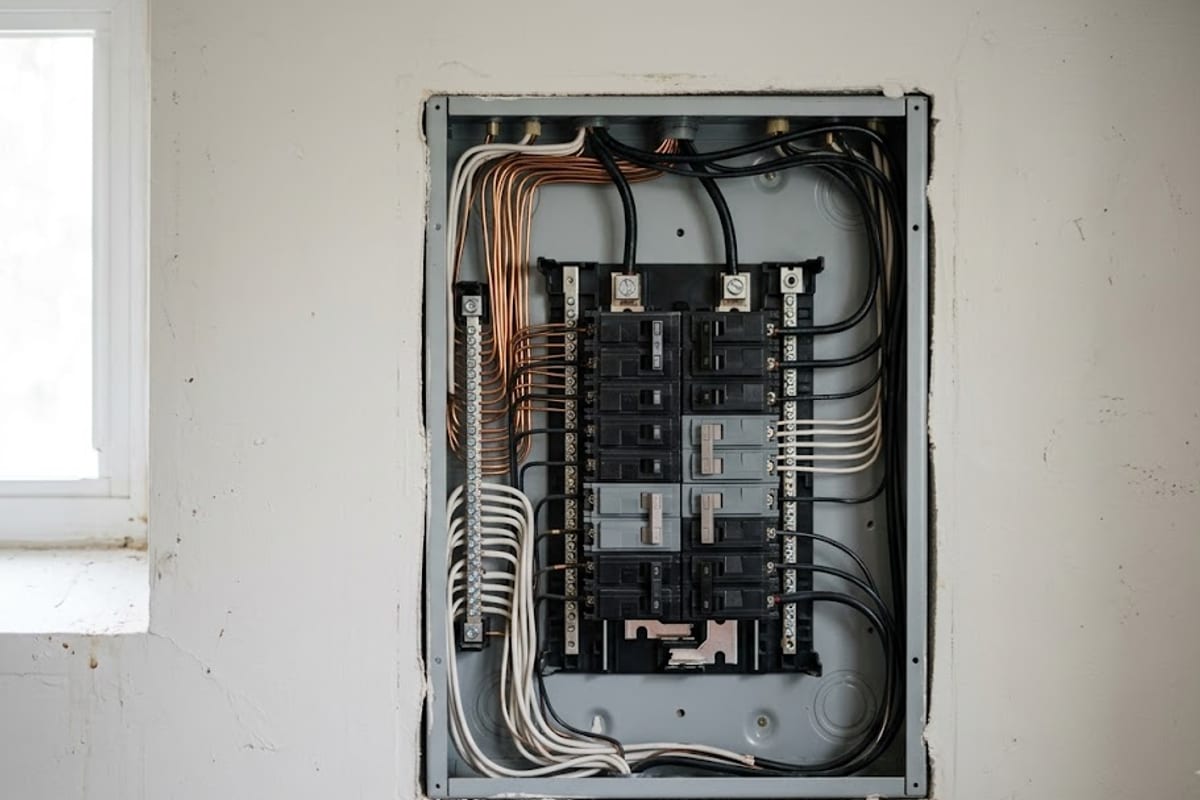
The main breaker moves outside into the meter-main. The panel inside is no longer service equipment. It becomes a feeder panel, a subpanel, even if it is the only panel in the house.
That has two consequences that affect cost:
- Neutrals and grounds must be separated in the inside panel. The neutral-to-ground bond moves to the meter-main, and the inside panel's neutral bar must be isolated from the enclosure, with equipment grounding conductors on a separate ground bar. See subpanel neutral and ground.
- The cable between the two needs four conductors: two hots, a neutral and a ground. Many older houses have a three-wire service entrance cable from meter to panel. That cable has to be replaced.
In a house getting a full service upgrade, both are part of the job anyway. In a house where only the inside panel is being replaced, they add work.
The benefit is simplicity. One breaker outside shuts off everything, and some meter-mains include a few extra breaker spaces for outdoor loads like an AC condenser or an EV charger.
Option 2: meter disconnect, not service equipment
Some metering equipment includes a disconnect ahead of the meter that is not the service disconnect. The inside panel stays the service equipment, with the main breaker and the neutral-to-ground bond where they were. This avoids converting the inside panel to a subpanel, but it requires equipment the utility approves, and not every utility accepts it.
Option 3: separate listed switch
A separate outdoor disconnect, such as a fused switch or an enclosed breaker marked suitable as service equipment, can be installed between the meter and the house. It can be the service disconnect (then the inside panel becomes a subpanel, as in option 1) or be installed as "not service equipment." This is common when the meter socket stays and only the panel is replaced.
What the utility has to approve
The meter socket is the utility's interface. Most utilities publish a list of approved meter sockets and meter-mains, and some regions have their own standards, such as the western utilities' EUSERC requirements. Before buying equipment, the electrician checks the utility's list, including:
- Ring or ringless cover, which depends on the utility's meter seals.
- Overhead or underground entry.
- Bypass, which some utilities require for larger or commercial-style sockets.
- Height and location, since utilities set a range for the meter's mounting height and require access for their readers and crews.
A meter-main that is not on the utility's list can fail the utility's inspection even after the city's electrical inspection passes.
Cost and scope
A meter-main costs more than a plain meter socket, but it replaces two pieces of equipment: the socket and the outdoor disconnect. In a full service upgrade, choosing a meter-main often adds little to the total, because the socket is being replaced anyway. The typical 200 amp service upgrade on our state pages is $1,800 to $4,000, around $2,800 nationally, and that range assumes current code equipment. See the cost to upgrade from 100 to 200 amp service.
The cost goes up when:
- The inside panel has to be converted to a subpanel and its bars rearranged or replaced.
- A three-wire service entrance cable to the inside panel must be replaced with a four-wire feeder.
- The meter has to move to meet the utility's location rules.
Meter-main or separate outdoor switch: which costs less
When the whole service is being replaced, a meter-main usually costs less than a plain meter socket plus a separate outdoor disconnect, because it is one enclosure and one set of connections. The inside panel becomes a subpanel, but in a full service upgrade the conductors between them are new anyway.
When only the inside panel is being replaced and the meter socket is in good shape, a separate listed disconnect between the meter and the house can be cheaper, especially when it is installed as a disconnect that is not service equipment. It avoids replacing the socket and avoids converting the new panel into a subpanel. Whether the utility and inspector accept it is a local question, so the electrician should confirm it before pricing.
Other benefits
Generator and solar connections. Some meter-mains include provisions for a generator inlet or a transfer device, or for solar interconnection. Those features vary by model and utility.
Surge protection. NEC 230.67 requires a surge protective device on dwelling services. Some meter-mains accept one directly.
Outdoor circuits. Extra spaces in a meter combo can feed an outdoor condenser or an EV charger without running a circuit back through the house.
Existing houses without an outdoor disconnect
Most houses built before the 2020 NEC was adopted locally have their main breaker inside. Nothing requires them to add an outdoor disconnect until service equipment is replaced. Firefighters in those houses rely on the utility to cut power at the meter or the pole. If you are planning a service upgrade, expect the outdoor disconnect to be part of it and budget accordingly.
Who does this work
A meter-main is service equipment. Installing it means working where the utility conductors land, and those conductors have no overcurrent protection. The utility must disconnect the service first. It is permitted and inspected work, done by a licensed electrician, and coordinated with the utility for disconnect, inspection and reconnect. See what a service upgrade involves and permits and inspection.
FAQ
Do I have to add an outdoor disconnect if I am not changing anything? No. The requirement applies to new services and to replacement of service equipment, under the code edition your jurisdiction has adopted.
Is a meter base with disconnect the same as a meter-main combo? A meter-main has a meter socket and a main breaker. A meter combo adds several branch circuit spaces. Both can be the service disconnect.
Can a meter-main feed two panels? Yes, through feed-through lugs or feeder breakers, depending on the model. This is how many 320 amp, 400 amp class services are built. See 400 amp service upgrade cost.