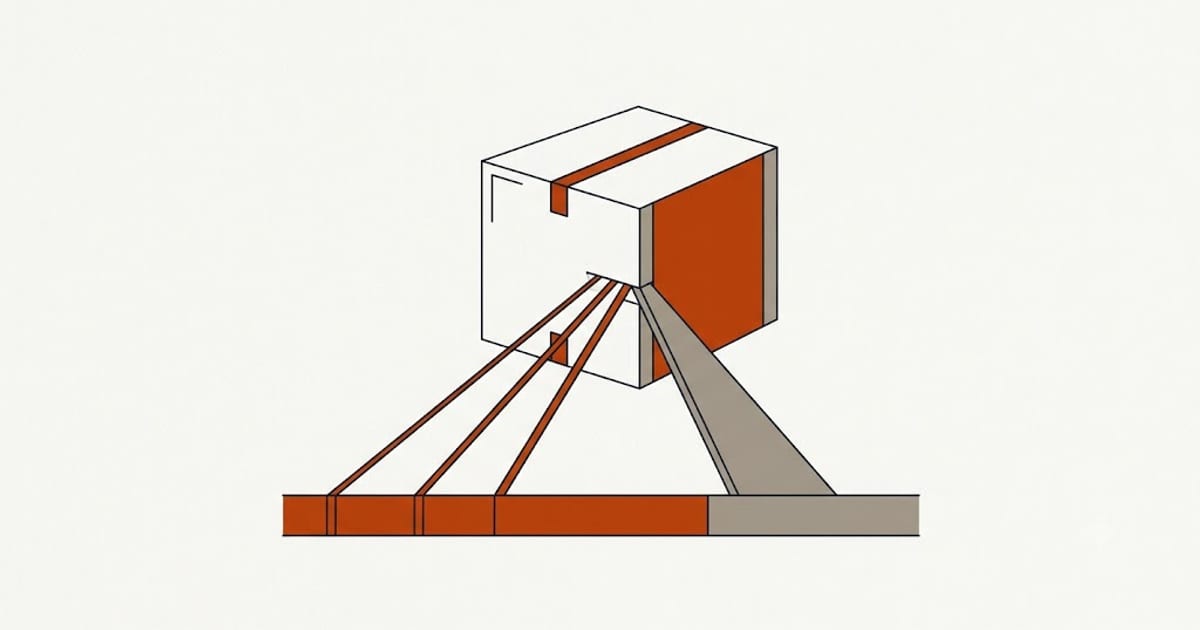
Grounding and bonding is a small line on an electrical quote and it is what determines whether the rest of the system protects anybody.
Two different jobs
Grounding connects the electrical system to earth. It stabilises voltage relative to ground and gives lightning and utility surges somewhere to go.
Bonding connects all the metal in the building together, so that a fault energising one metal object cannot leave a dangerous voltage difference between it and another.
The second is the one that protects people directly, and it is the one most often incomplete.
The electrodes
The Code requires the grounding electrode system to include every qualifying electrode present at the building:
A metal underground water pipe in direct contact with earth for at least ten feet, where one exists. It must be supplemented by another electrode, because a plastic repair anywhere along it can leave it isolated.
A concrete-encased electrode — rebar in the footing, sometimes called a Ufer ground — which is required in new construction and is very effective.
Ground rods, usually two, spaced apart, where nothing else qualifies. A single rod is acceptable only if its resistance is measured and found low enough, which is rarely done, so two is the practical standard.
Building steel and metal underground structures, where present.
The bonds
The water piping system, bonded to the service.
The metal gas piping, bonded — usually accomplished through the equipment grounding conductor of an appliance, and sometimes requiring a separate bond.
Corrugated stainless steel gas tubing (CSST), which has its own bonding requirement in most editions, sized larger than an ordinary bond because of its vulnerability to lightning-induced arcing.
Building steel, where structurally present.
Where it goes wrong in older houses
One ground rod instead of two.
A water pipe bond that is now useless because the service line was replaced with plastic, or because a plastic repair coupling isolated the section.
A bond disconnected during plumbing work and never restored — a common finding after a water heater replacement.
No CSST bond, in houses where flexible gas tubing was installed later.
A neutral bonded at a subpanel, which puts load current on the grounding conductors continuously.
The subpanel rule
At the service panel, the neutral and the grounding system are bonded together. That is the single point where they connect.
At every subpanel, they are kept separate: an isolated neutral bar, a separate ground bar bonded to the enclosure, and a four-wire feeder.
Getting this wrong means normal return current flows on the grounding conductors and on any metal path between the panels, which is both a shock hazard and a source of stray voltage.
What it costs
Very little relative to any other part of an electrical job. Two ground rods and the conductors are a small material cost and an hour or two of labour.
It is the part of a service upgrade with the highest safety return per dollar, and it is the part most easily left out of a quote for a like-for-like panel change.
What to ask for
That the grounding electrode system be brought to current requirements as part of any panel or service work, itemised on the quote.
And on an existing house, a visual check: two rods, an intact water pipe bond at the correct location, a CSST bond if there is CSST, and separated neutrals at every subpanel.
Surge protection depends on it
A whole-house surge protective device at the panel works by diverting a surge to ground. Its performance is limited by the impedance of the path it has to divert into.
Fitting an SPD to a service with a single corroded ground rod and a broken water bond gives away much of what it could do. The two belong together, and the grounding work is the cheaper half.
What a ground does not do
It does not cause a breaker to trip on an ordinary overload, and it is not the return path for normal current.
On a line-to-ground fault, the fault current returns through the equipment grounding conductor back to the source, and that is what trips the breaker. The earth connection is not part of that path. This is why bonding — joining the metal together — matters more for personal safety than the rods do.