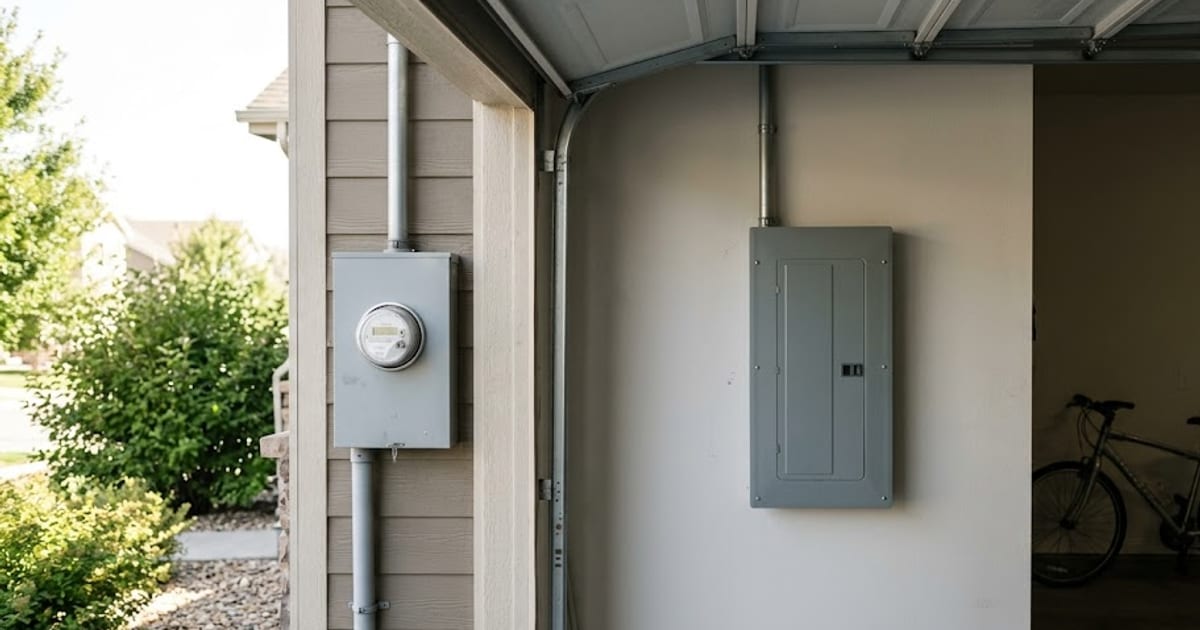
A panel upgrade replaces the breaker box inside the house and leaves the amperage where it was. A service upgrade replaces everything from the utility connection to the panel, including the meter socket, the mast or underground conduit, the service conductors and the grounding, so the house can take more current. People use both names for both jobs, which is why two quotes for "an upgrade" can differ by thousands of dollars.
If the goal is more capacity, for an EV charger, a heat pump or an electric range, you need a service upgrade. If the goal is to replace an unsafe or full panel and the capacity is already enough, a panel upgrade may be all you need.
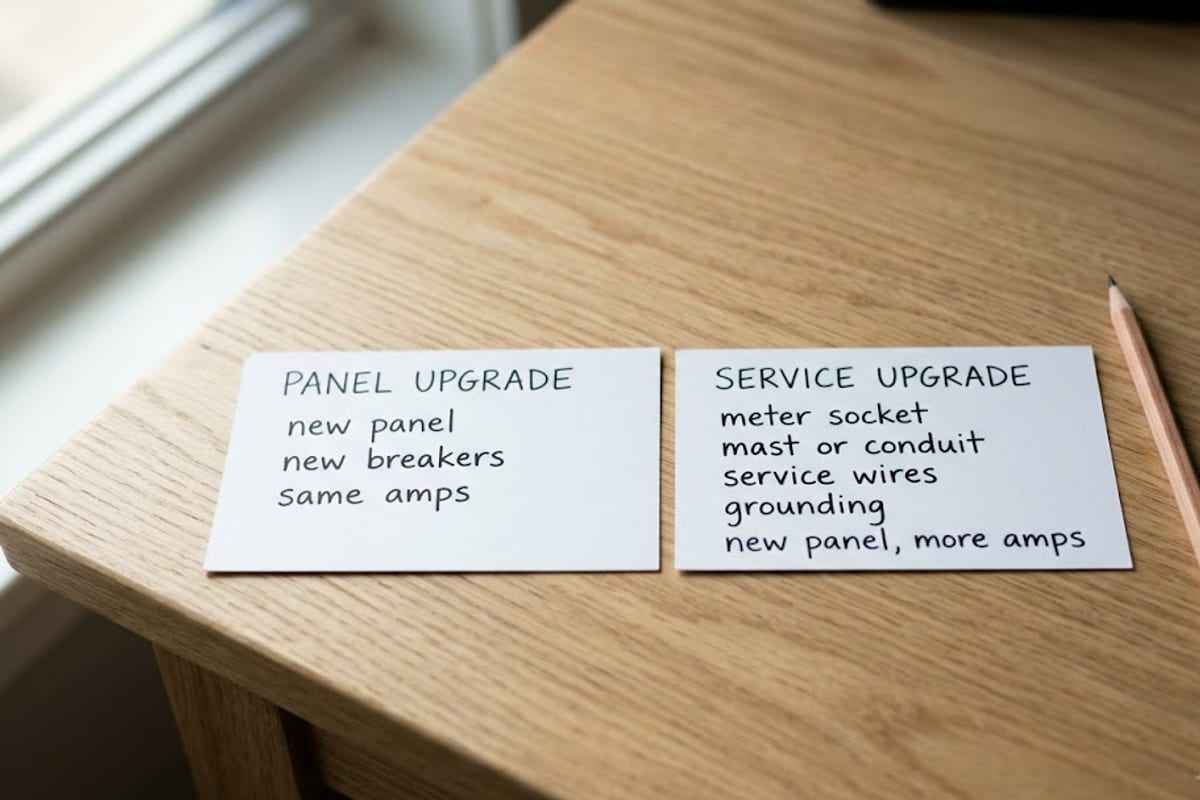
What each job replaces
| Part | Panel upgrade | Service upgrade |
|---|---|---|
| Panel and main breaker | Replaced | Replaced |
| Branch breakers | Replaced or reused | Replaced or reused |
| Meter socket | Stays | Replaced |
| Mast, weatherhead or service conduit | Stays | Replaced |
| Service entrance conductors | Stay | Replaced, larger |
| Grounding electrode system | Checked, often updated | Updated to current code |
| Utility disconnect and reconnect | Needed | Needed |
| Amperage available | Unchanged | Increased |
The key line is the last one. The amount of current a house can draw is limited by the smallest part between the utility and the main breaker. A 200 amp panel installed on 100 amp conductors and a 100 amp meter socket is a 100 amp service with a larger box.
When a panel upgrade is enough
A panel-only job makes sense when the service equipment outside is already the right size and in good condition. Common cases:
A problem panel brand. Federal Pacific Stab-Lok and Zinsco panels have long histories of breakers that fail to trip. Replacing the panel is the fix, and the service size does not need to change. See Federal Pacific and Zinsco panels.
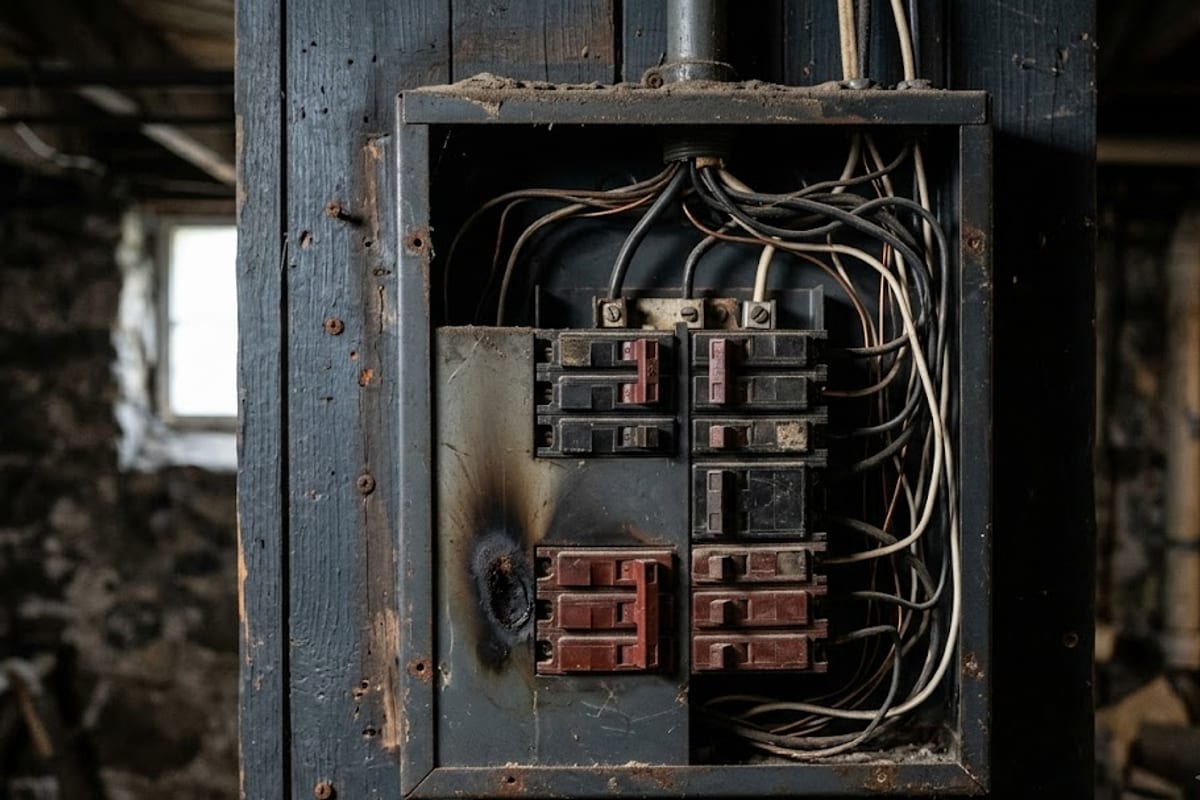
A full panel. A panel with no free spaces can be replaced with one that has more spaces at the same rating. Often a subpanel or a few tandem breakers solve the same problem for less. See what to do when a panel is full and where tandem breakers are allowed.
Damage. Water in the panel, corrosion, or overheating at the bus.
A house already wired for 200 amps with an old 200 amp panel. Replacing it is a panel job.
On our pages a panel-only replacement usually runs well under a full service upgrade, because the outside work, the conductors and the utility coordination are the expensive parts.
When you need a service upgrade
You need a service upgrade when a load calculation shows the existing rating is too small. The calculation follows NEC Article 220 and counts square footage, fixed appliances, and the larger of heating or cooling, with demand factors.
It is common for a 100 amp house to need an upgrade when it adds:
- A heat pump with backup electric heat strips.
- A Level 2 EV charger at 40 or 48 amps.
- An electric range or induction cooktop replacing gas.
- An electric tankless water heater, which can draw well over 100 amps on its own.
Our service size calculator runs the calculation for a given house, and do I need 200 amp service explains the method.
The code items that differ
A service upgrade replaces service equipment, and that triggers current service rules that a panel-only job may not:
- Surge protection. NEC 230.67 requires a surge protective device on dwelling services, including replacements.
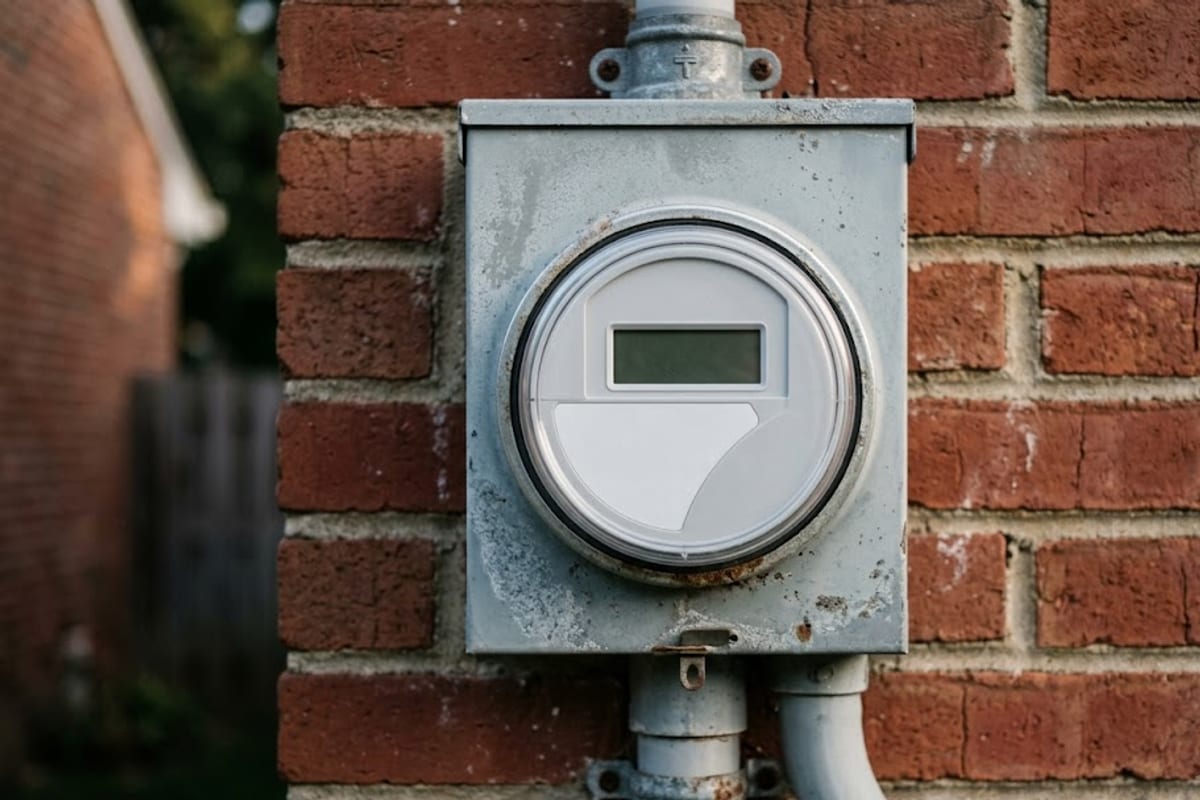
- Outdoor emergency disconnect. NEC 230.85 requires a readily accessible disconnect outside one- and two-family dwellings when service equipment is replaced. Replacing the meter socket with one that has a main breaker is the usual solution.
- Grounding electrodes. Brought up to NEC Article 250, often two ground rods at least 6 feet apart.
Local rules decide how far a panel-only replacement triggers these. Some inspectors treat a new panel with a main breaker as service equipment and apply 230.67 and 230.85 anyway. Ask the electrician what your jurisdiction requires before comparing prices.
Cost difference
A 200 amp service upgrade is typically $1,800 to $4,000 on our state pages, around $2,800 nationally. Fixr's January 2025 data puts panel work at $1,500 to $4,500 with a $3,000 average, and that range mixes both kinds of job.
A panel-only replacement sits at the low end of those ranges because it skips the meter socket, mast, service conductors and most of the utility work. It rises quickly if the panel has to move, or if many circuits need AFCI and GFCI breakers under the current rules.
A useful check: if a quote for "200 amp upgrade" on a 100 amp house does not list a meter socket and service conductors, it is a panel quote.
Three examples
A 1962 house with a 100 amp Federal Pacific panel, gas heat and gas cooking. The load calculation comes to 70 amps. The service equipment outside is sound. A panel replacement fixes the safety problem, and 100 amps stays adequate.
A 1985 house with a 100 amp panel, adding a heat pump and an EV charger. The calculation with the new loads comes to 135 amps. This needs a service upgrade to 200 amps, including a new meter socket and conductors. A new panel alone would not add capacity.
A 2005 house with a 200 amp service and a full 30 space panel, adding a hot tub. The calculation fits under 200 amps. The problem is spaces, not capacity. A subpanel, or replacing the panel with a 40 space 200 amp panel, solves it without touching the service.
In each case the load calculation, not the age or look of the panel, decides which job is needed.
Timeline differences
A panel-only replacement is often faster to schedule. Some utilities do not need to be involved if the electrician can disconnect at an existing outdoor main or pull the meter under the utility's rules, though many still require a utility appointment to pull the meter seal. A service upgrade always involves the utility, and for 400 amp class services it can involve a utility engineering review that adds weeks.
Questions to ask before signing
- Is the existing meter socket, mast and conductor rated for the amperage you want? What is its rating?
- Did you do a load calculation, and what did it show?
- Will the utility replace the drop or lateral, and who pays?
- Which code items are included: surge protection, outdoor disconnect, grounding, AFCI and GFCI?
- Is the permit included, and when is the inspection?
Both jobs are licensed work with a permit and an inspection. The service conductors on the line side of the main breaker stay energized until the utility disconnects them, and they have no overcurrent protection. That is the reason the utility disconnect is part of the job and why this is not homeowner work.
For the step-by-step of the larger job, see what a service upgrade involves and the cost to upgrade from 100 to 200 amp service.
FAQ
Can I replace my panel with a 200 amp panel and upgrade the service later? Yes. Installing a 200 amp panel on a 100 amp service is common, with the main breaker or the service conductors setting the limit at 100 amps until the service is upgraded. The electrician must make sure the main breaker matches the smaller rating.
Does a new panel lower my electric bill? No. A panel does not change energy use.
Is a service upgrade the same as a meter upgrade? The meter belongs to the utility and is swapped by them. The meter socket belongs to you and is replaced as part of a service upgrade.
Does my insurance care which one I do? Insurers usually ask about the panel brand, fuses, and the service size. A panel replacement answers questions about a problem brand or fuses; a service upgrade answers questions about capacity. Ask your insurer which applies before choosing.