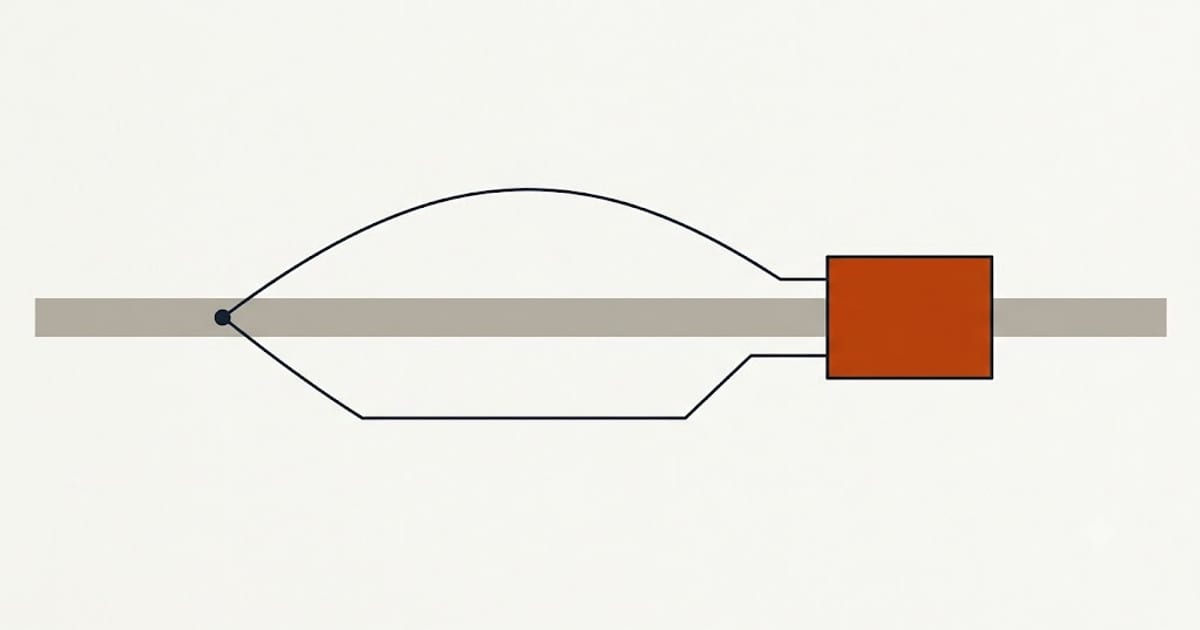
An overhead service brings power from a utility pole to the house on a service drop, the wires that attach to a mast or a bracket on the house. An underground service brings it from a pole, a transformer or a pedestal through conductors buried in the ground, called the service lateral. Overhead is cheaper to build and to repair. Underground is out of sight, safer from storms and trees, and more expensive to install or to convert to.
A service upgrade, for example from 100 to 200 amps, usually keeps whatever type the house has. Converting from overhead to underground is a separate project that a capacity upgrade does not require.
What you own and what the utility owns
The split matters because it decides who pays for each part.
On an overhead service, the utility usually owns the pole and the drop up to the point of attachment on the house. The homeowner owns the mast or attachment, the weatherhead, the service entrance conductors, the meter socket and everything inside.
On an underground service, the division varies more by utility. Some utilities own the lateral all the way to the meter socket. Others own it only to a pedestal or transformer, and the homeowner owns the conductors and conduit from there to the house. Your utility's service manual spells this out.
Upgrading an overhead service
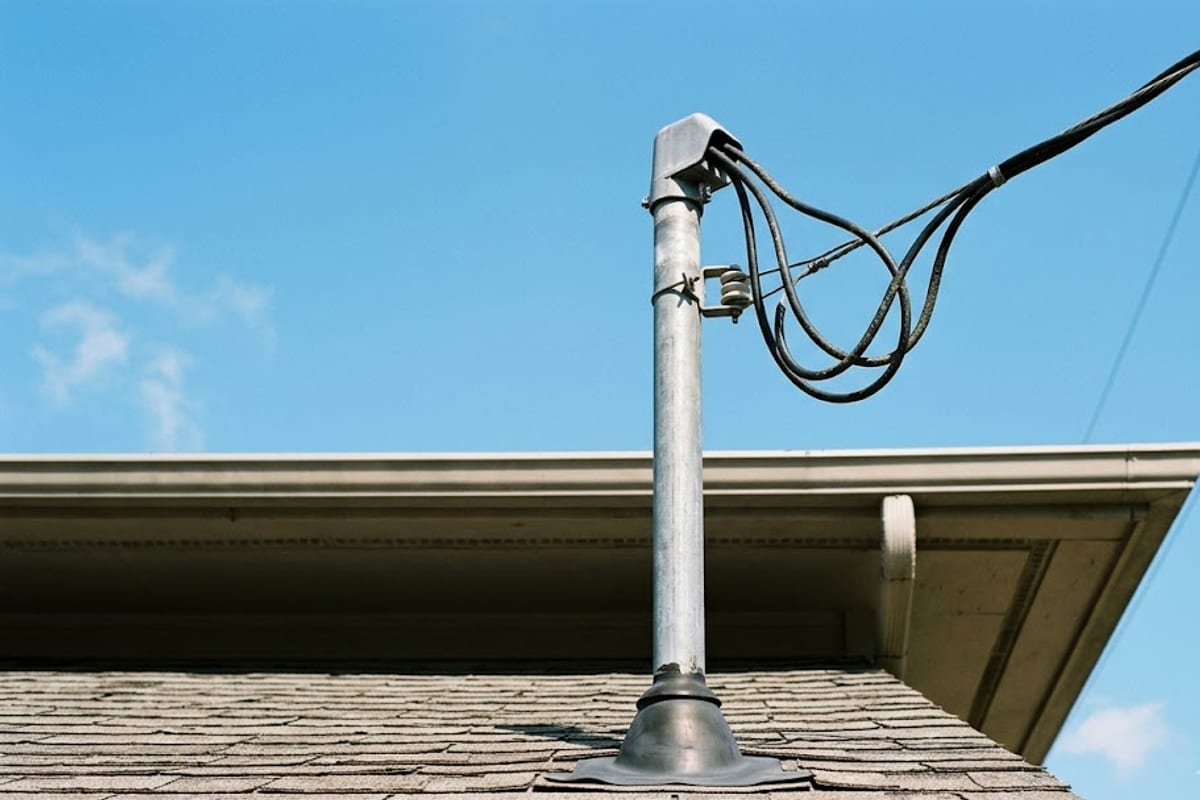
On an overhead service upgrade, the electrician replaces the mast, weatherhead, service entrance conductors and meter socket with parts rated for the new service. The utility reconnects its drop, and for 200 amps it usually reuses the existing drop.
The mast has to meet clearance and strength rules:
- Clearance over the roof. NEC 230.24(A) generally requires the drop to be at least 8 feet 6 inches above the roof. Exceptions allow 3 feet on roofs sloped 4 in 12 or steeper, and 18 inches where the mast goes through the roof within 4 feet of the edge and the drop crosses no more than 6 feet of overhang.
- Clearance over the ground. Under 230.24(B), at least 10 feet above finished grade and sidewalks, 12 feet over residential property and driveways, and 18 feet over public streets and alleys.
- Mast strength. NEC 230.28 requires the mast to be strong enough, or braced or guyed, to support the pull of the drop. Only power service drop conductors can be attached to it, not cable or phone lines.
- Point of attachment at least 10 feet above finished grade under 230.26.
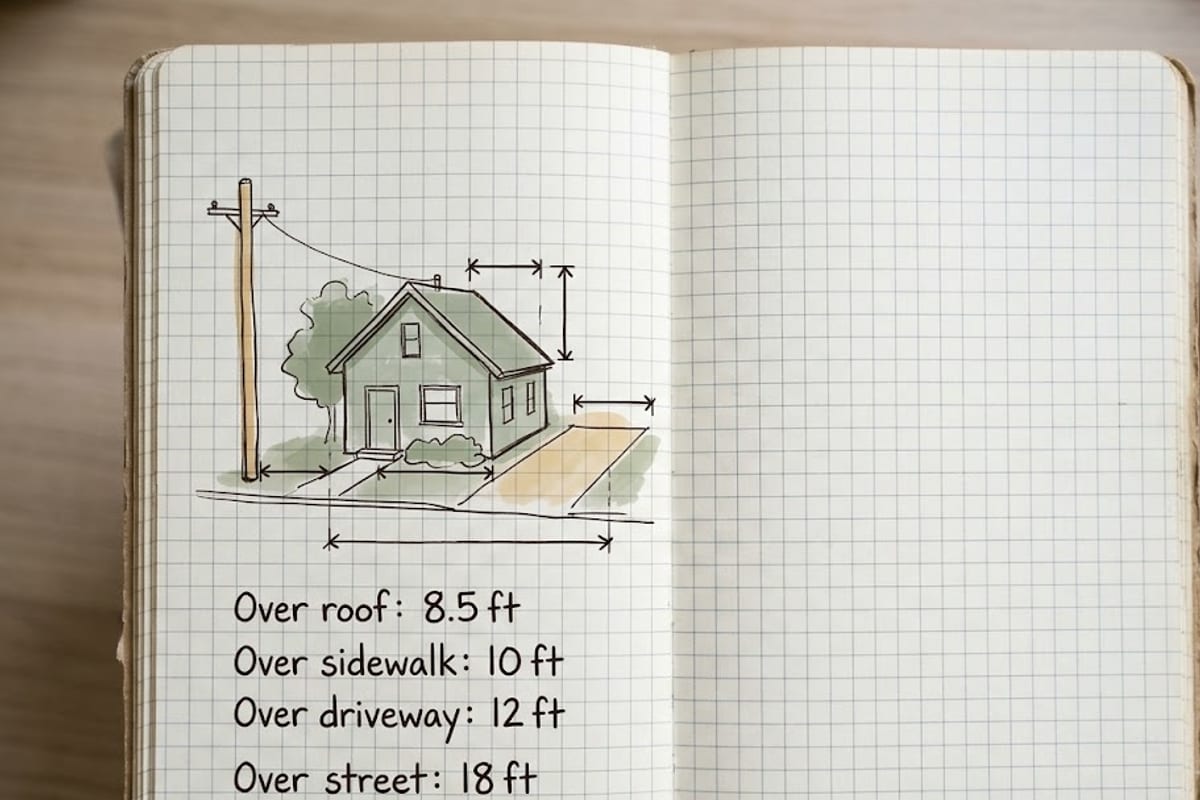
A low attachment point is a common reason a mast must be taller than the old one. Where a mast goes through the roof, the roof flashing and boot are part of the job.
Upgrading an underground service
On an underground service, the new service entrance conductors run from the utility's point of connection to the new meter socket. The work depends on the existing conduit:
- If the existing conduit is large enough for the new conductors, the electrician or utility pulls new wire through it.
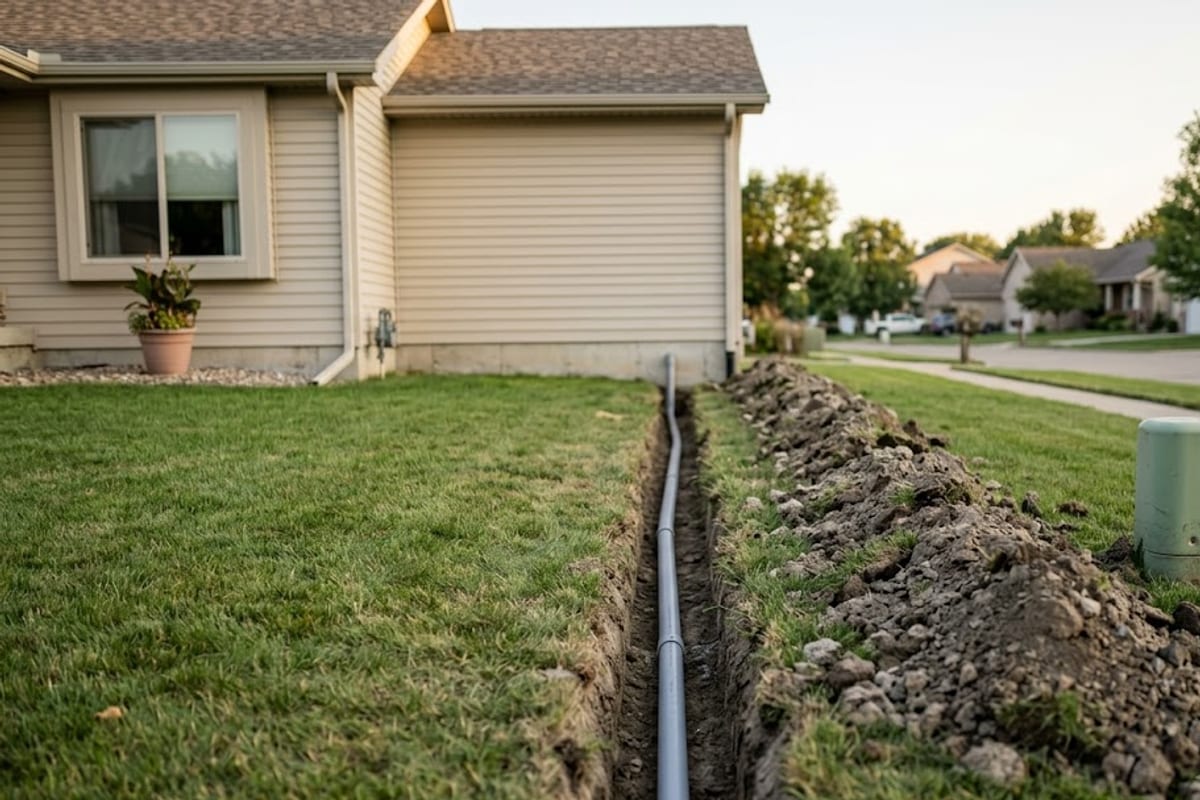
- If it is too small, damaged, or the old service was direct buried cable, a new conduit is needed, which means digging.
Underground upgrades cost more when digging is involved, and the cost depends on distance, soil, and what is in the way: driveways, landscaping, other buried utilities. The utility or its contractor may do the lateral work, sometimes at the homeowner's cost.
NEC 300.5 sets minimum burial depths. For a residential service, 24 inches for direct buried cable and 18 inches for PVC conduit are the common figures, with more under driveways in many areas. Many utilities set their own, deeper standard for laterals they own. Before any digging, call 811 to have existing utilities marked.
Converting overhead to underground
Converting means building a new underground service and removing the old overhead drop. The usual pieces:
- A utility application and design, because the utility decides where the new service starts: a pole with a riser, a transformer, or a pedestal.
- A trench from that point to the house, and conduit in the trench.
- A riser on the pole or a connection at the transformer, done by the utility.
- A new meter socket suitable for underground entry, and new service entrance conductors.
- Removal of the old mast and drop, and repair of the roof or siding where they were.
- An inspection before the utility energizes the new lateral.
Because an existing overhead service has to be taken down as well as a new one built, utilities usually charge the homeowner the full cost of the conversion. Costs vary with distance and conditions and are usually in the thousands of dollars, well above a same-type service upgrade. Some utilities publish a fee schedule for residential conversions. Ask for it before getting electrician quotes, because the utility's share is often the larger one.
Common reasons people convert:
- Trees that repeatedly bring the drop down in storms.
- A drop crossing a spot where a new addition, garage, or pool will go.
- Appearance, especially when the rest of the street is underground.
- A mast through the roof that leaks or is in the way of a new roof.
When a storm tears off the mast
If a tree limb pulls the service drop and bends or rips the mast from the house, the repair is split between two parties. The utility de-energizes and later reconnects its drop. The homeowner is responsible for the mast, weatherhead, service entrance conductors and meter socket, and needs an electrician to repair them, with an inspection in most areas before the utility reconnects.
Stay away from a downed drop and treat every wire as energized. Report it to the utility. After a large storm, utilities often need a licensed electrician's repair before they will restore service, which is why electricians' schedules fill up quickly after one. Taking a photo of the damage for the insurer is useful, since homeowner's policies often cover the mast repair.
Which is more reliable
Underground services avoid wind, ice and tree damage, which cause most overhead outages at a single house. They are harder to fault-find and repair when something does fail, often because of water intrusion or digging damage, and repairs take longer. For most homeowners the utility's distribution lines on the street matter more to reliability than the service to the house.
Cost of a same-type upgrade
A 200 amp service upgrade that keeps the same service type typically costs $1,800 to $4,000 on our state pages, around $2,800 nationally. Underground upgrades that need a new conduit run toward the top of the range or above. See what a service upgrade involves and the cost to upgrade from 100 to 200 amp service.
Who does this
Both kinds of service involve the utility's unprotected conductors, which only the utility can de-energize. Masts, meter sockets, service conductors and trenching for services are permitted and inspected work done by licensed electricians, with the utility handling its side. Never attach anything to a service mast or trim trees near a service drop yourself; utilities will de-energize or trim around a drop on request.
FAQ
Does a 200 amp upgrade require underground service? No. Overhead services handle 200 amps routinely, and 400 amp class services can be overhead too.
Who pays to move an overhead drop for an addition? Usually the homeowner, through the utility's relocation process. Ask the utility early, because it can affect where the addition's meter goes.
Can I bury the cable myself to save money? Some utilities allow the homeowner to dig the trench to their specification. The conductors, conduit, and connections are still inspected electrical work.